|

UK
HISTORY OF THE GRAND LODGE - Origins
of the Premier Grand Lodge and expansion overseas
Why would a society need to be secret?
Why
have secret handshakes?
Why
agree to lie for another in a court of law?
These
little matters speaks for themselves. Freemasons consider themselves to be
above the law and they want to keep these facts secret for obvious
reasons.
Freemasonry in England - The origins of Freemasonry are the subject of
great debate. That there is a connection with the operative stonemasons
who built the great medieval cathedrals and castles is generally accepted
by Masonic historians – but whether that connection was direct or
indirect is the subject of speculation.
The first record of the ‘making’ of an English Freemason is Elias
Ashmole, the antiquarian and herald, whose collections formed the basis of
the Ashmolean Museum in Oxford. He recorded in his diary that a lodge met
at his father-in-law’s house in Warrington, Cheshire on 16 October 1646
to make him a Mason. None of those involved was a stonemason. In the later
1600s there is further evidence for the existence of Freemasonry as a
separate organisation unrelated to groups controlling the stonemason’s
craft.
Organised Freemasonry became established on 24 June 1717 when four London
lodges came together at the Goose and Gridiron Ale House, St Paul’s
Churchyard, formed themselves into a Grand Lodge and elected Anthony Sayer,
Gentleman, as their Grand Master – the first Grand Lodge in the world.
Initially the Grand Lodge was simply an annual feast for lodges in London
but in 1721 John, Duke of Montagu, was elected Grand Master and the Grand
Lodge met in ‘quarterly communication’ and began to establish itself
as a regulatory body, attracting to it lodges meeting outside London.
In 1723 the first rulebook – the Constitutions of Masonry – was
published and William Cowper, Clerk of the Parliaments, was appointed
Secretary to the Grand Lodge to keep minutes of its meetings. By 1730 the
Grand Lodge had over 100 lodges in England and Wales under its control and
had begun to spread Freemasonry abroad, warranting lodges to meet in
Madrid and Calcutta.
For historical reasons separate Grand Lodges were formed in Ireland (1725)
and Scotland (1736). Between them the ‘home’ Grand Lodges took
Freemasonry around the globe. From the 1730s lodges were set up in Europe,
the West Indies, North America and India.
In the later 18th and the 19th centuries British Freemasonry was taken to
the Mid and Far East, Australasia, Africa and South
America, mirroring the
development of the British Empire. When those areas eventually achieved
nation status many of the lodges formed independent local Grand Lodges,
but other lodges decided to remain with their parent Grand Lodge –
resulting in the United Grand Lodge of England still having some 750
lodges overseas, principally in Commonwealth countries.
The premier Grand Lodge of England continued developing in the 1730s and
1740s without any opposition. There had been considerable public interest
– meetings were advertised and reported on in the growing number of
local newspapers – more especially in what the ceremonies of Freemasonry
were. Enterprising journalists and pamphleteers were not slow to produce
‘exposures’ of what they believed were the ‘secrets’ of
Freemasonry. Publicity increased interest and a growing number of
aristocrats, landed gentry and professional men began to seek admission.
In 1737 the first Royal Freemason was made - Frederick Lewis, Prince of
Wales, son of King George II.
|
ADDRESS:
|
Freemasons'
Hall
60 Great Queen Street
London
WC2B 5AZ
|
|
TELEPHONE:
|
+44
(0) 20 7831 9811
|
|
FAX:
|
+44
(0) 20 7831 6021
|
LINKS:
MQ
Magazine http://www.mqmagazine.co.uk
Supreme
Grand Chapter of England
Official
website of the Royal Arch Masons of England http://www.grandchapter.org.uk
Library
and Museum of the United Grand Lodge of England
Official
website of the Library and Museum http://freemasonry.london.museum
Letchworth's
Shop on-line http://letchworthshop.co.uk
Masonic
Charities
The Grand Charity www.grandcharity.co.uk
The
Royal Masonic Trust for Girls and Boys www.rmtgb.org
The Royal Masonic Benevolent Institution www.rmbi.org.uk
The New Masonic Samaritan Fund www.nmsf.org
Related Organisational Links
Canonbury Masonic Research Centre www.canonbury.ac.uk
Sheffield University Centre for Masonic Research www.freemasonry.dept.shef.ac.uk
Quatuor Coronati Lodge of Research www.quatuorcoronati.com
Freemasonry Today Magazine www.freemasonrytoday.com
The Cornerstone Society www.cornerstonesociety.com
Christian
or Anti-Christian?
Freemasonry
refers to the principles, institutions, and practices of the fraternal
order of the Free and Accepted Masons. The largest worldwide society,
Freemasonry is an organization of men based on the "fatherhood of God
and the brotherhood of man," using builders' tools as symbols to
teach basic moral truths generally accepted by persons of good will. Their
motto is "morality in which all men agree, that is, to be good men
and true." It is religious in that a belief in a Supreme Being and in
the immortality of the soul are the two prime requirements for membership,
but it is nonsectarian in that no religious test is used.1 The purpose of
Freemasonry is to enable men to meet in harmony, to promote friendship,
and to be charitable. Its basic ideals are that all persons are the
children of one God, that all persons are related to each other, and that
the best way to worship God is to be of service to people.
Masons have no national headquarters as such, but the largest regional is
the Scottish Rite Southern Jurisdiction (35 Southern states), which is
headquartered in Alexandria, Virginia. U.S. membership is claimed at about
3.5 million, with about five million worldwide. The basic unit of
Freemasonry is the lodge, which exists under a charter issued by a grand
lodge exercising administrative powers.
The
lodges are linked together informally by a system of mutual recognition
between lodges that meet the Masonic requirements. The lodge confers three
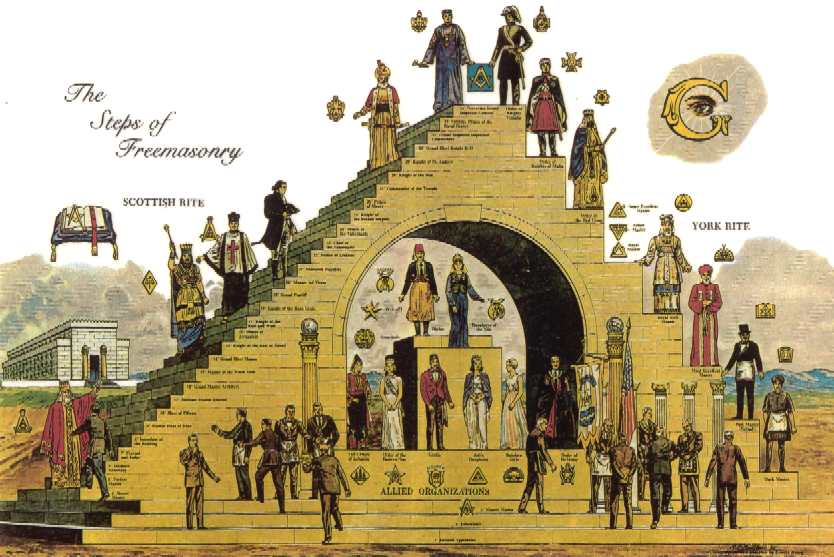
degrees: Entered Apprentice, Fellow Craft, and Master Mason. Additional
degrees are conferred by two groups of advanced Freemasonry: the York
Rite, which awards 12 degrees; and the Scottish Rite, which awards 30
higher degrees. In the United States and Canada, members have formed a
large number of groups to enable them to expand their social and
charitable activities. The best known of these groups is the Shriners
(official name: "Ancient
Arabic Order Nobles Mystic Shrine"), who hold festive parades
and support hospitals for crippled and burned children. (To be a Shriner,
one must be a 32nd degree Scottish Rite Mason, or its equivalent in the
York Rite [Knights Templar]). [The 33rd degree is an honorary degree
bestowed upon especially worthy masons who have accomplished outstanding
work in such fields as religion and politics.]
Although only men (of at least 21 years of age) can be Masons, related
organizations are available for their relatives -- there is the Order of
the Eastern Star for Master Masons and their wives; the Order of De Molay
for boys; and the Order of Job's Daughters and the Order of Rainbow for
young girls. The Masonic Lodge has more than a hundred such fraternal
organizations, including Daughters of the Nile, The Tall Cedars of
Lebanon, The Mystic Order of Veiled Prophets Of The Enchanted Realm, The
Knights Of The Red Cross Of Constantine, and The Blue Lodge.
Though some Masons trace their organization's origin back to the beginning
of time (much of their teaching is tied to Solomon's temple, but they also
claim that John the Baptist and the Apostle John were Masons), modern
Masonry dates only to 1717. It was in that year that four lodges in Great
Britain formed the first Grand Lodge of England, which became the Premier
Grand Lodge of the world. Since that time, lodges have spread all over the
world with local grand lodges formed whenever enough lodges exist in an
area. Lodges first appeared in America in Philadelphia (1730) and Boston
(1733).
The terminology and symbolism of Masonry seem to come mostly from the
actual craft of stonemasonry during the Middle Ages. The "free"
in Masonry probably came from the "freestones" (stones that
could be cut without splitting) with which Mason's worked. Stonemasons had
three classifications for workers practicing their craft: Apprentice,
Fellow Craft, and Master Mason. As mentioned earlier, this is also the
terminology used for the first three degrees in Masonry today.
Many allegories and symbols are used in Masonry. The old English
Constitution refers to an ancient definition of the ancient craft:
"Freemasonry is a system of morality, veiled in allegory, and
illustrated by symbol," [Freemason' symbols can be made to mean
almost anything a person chooses to make them; Master Masons take an oath,
"Ever to conceal, never to reveal."] It seeks to make good men
better through the form of belief in "the fatherhood of God, the
brotherhood of man, and the immortality of the
soul."
Masonry
was originally a means by which people in the occult could practice their
"craft" and still remain respectable citizens. The
official publication of "The Supreme Council 33" of Scottish
Rite Freemasonry is titled New Age. Some church denominations
are also led by avowed Masons. For example, a 1991 survey by the Southern
Baptist Convention Sunday School Board found that 14% of SBC pastors and
18% of SBC deacon board chairs were Masons; it is also estimated that SBC
members comprise 37% of total U.S. lodge membership. (A 2000 updated SBC
report found that over 1,000 SBC pastors are Masons.)
Many other secret societies seem to be patterned after the Masons. L.
James Rongstad says that Freemasonry "is the 'Granddaddy' of all
lodges. Its teachings, rituals, customs and practices, and its secrecy
have had an inspirational effect on other similar groups such as the
Moose, Eagles, Elks, and the National Grange." Mormon Temple rites
are also strikingly similar to Masonic Lodge practices (probably because
Joseph Smith, the founder of the Mormon Church, was also a Mason). Most of
the rituals of today's college fraternities are also based more or less
directly upon Masonic rituals.
The
symbols on the back of the U.S. dollar bill (pyramid, all-seeing eye, the
number of feathers on the eagle's spread wings, the stars above the
eagle's head in the shape of the Star of David, and the mottos e
pluribus unum [out of many one] and novus ordo seclorum
[a new order of the ages]) also appear to emanate from Freemasonry; this
would not be surprising considering many of America's so-called founding
fathers were themselves Masons -- George Washington, Thomas Jefferson,
Benjamin Franklin, Ethan Allen, John Hancock, John Paul Jones, Paul
Revere, Robert Livingston, and 35 other lesser known men who were signers
of the Declaration of Independence and/or the Constitution. (It should be
noted that there were also a number of the founding fathers who condemned
masonry: John Adams, John Quincy Adams, James Madison, Millard Fillmore,
Daniel Webster, and Charles Sumner.) Other notable men in history who have
been Freemasons include Mozart, Henry Ford, Rudyard Kipling, Gerald Ford,
Norman Vincent Peale, Douglas MacArthur, and Will Rogers.
Since Masons are involved in so many worthy causes, many are unaware that
Masonic leaders readily admit that Freemasonry is actually a religion, not
merely a "fraternal, social, civic service organization." Joseph
Fort Newton (1880-1950), an Episcopal minister and recognized authority in
the Masonic world, said, "Masonry is not a religion but
Religion -- not a church but a worship in which men of all religions may
unite." In fact, Freemasonry even sees itself as superseding and
unifying all religions. (At various times and places, Freemasonry has met
religious and political opposition. Religious opponents, especially the Roman
Catholic and Eastern Orthodox churches, have traditionally claimed
that Freemasonry is a religion and is a secret organization.)
Henry Wilson Coil is the author of the encyclopedia that many lodges now
accept as their authoritative source (Coil's Masonic Encyclopedia).
Coil says that if Freemasonry is not a religion, nothing would have to be
added to make it such, and that the religious service at the funeral of a
Mason is evidence enough that Freemasonry is a religion. But the fact that
Freemasonry is religion would not necessarily condemn it, except
that the views of the Masonic religion are in open conflict
with Biblical Christianity, so much so that, in our
opinion, a knowledgeable and committed Mason could not possibly be a true
Christian.
Below is detailed what the Masons believe about their source of authority,
God, Jesus Christ, sin, and salvation and future life:
1. Source of Authority. Masons refer to the Bible as the
"Volume of the Sacred Law" (V.S.L.), and it is considered an
indispensable part of what is called "the furniture" in a
Masonic Lodge. But the Bible is used only in a so-called
"Christian" lodge -- the Hebrew Pentateuch is used in a Hebrew
lodge, the Koran in a Mohammedan lodge, the Vedas in a Brahmin lodge, etc.
Jim Shaw, a former 33rd degree Mason, says that Masonry is not based on
the Bible (referred to as "The Great Light"), but on the Kabala
(Cabala), a medieval book of mysticism and magic. Masonic authority Henry
Wilson Coil also admits that the Kabala's teachings can be seen in some of
the mystical and philosophical degrees of Masonry. Albert Pike (see next),
the man responsible for virtually rewriting the Scottish Rite degrees into
their present form, said that the Masonic "search after light"
leads directly back to the Kabala, the ultimate source of Masonic beliefs
(Morals and Dogma).
One of the great authorities on Masonry was Albert Pike
(1809-1901), Sovereign Grand Commander of the Southern Supreme Council of
Scottish Right Freemasonry in the USA and "an honorary member of
almost every Supreme Council in the world" (Albert G. Mackey, 33rd
degree, and Charles T. McClenachan, 33rd degree, Encyclopedia of
Freemasonry, The Masonic History Company, 1921, rev. ed.; 2:564).
Pike authored Morals and Dogma of the Ancient and Accepted Scottish
Rite of Freemasonry for the Supreme Council of the 33rd Degree,
which was published by its authority. This compendium of official Masonic
lore clearly traces Masonry to Hinduism, Buddhism, Zoroastrianism, and
other Eastern religions. Albert G. Mackey, co-author of Encyclopedia
of Freemasonry, is also one of Masonry's highest authorities. In
his Manual of the Lodge, he traces Masonic teaching back to
"the ancient rites and mysteries practiced in the very bosom of pagan
darkness. ..." (Albert G. Mackey, Manual of the Lodge,
Macoy and Sickles, 1802, p. 96).
In the final analysis, Masons do not adjust their beliefs to fit the
Bible, the Bible is adjusted to fit their beliefs. A Mason's loyalty is
never to God but to the Lodge. Coil has concluded that: "The
prevailing Masonic opinion is that the Bible is only a symbol
of Divine Will, Law, or Revelation, and not that its contents
are Divine Law, inspired, or revealed. So far, no responsible authority
has held that a Freemason must believe the Bible or any part of it."
Masonry's only concern is that each person must swear by the most holy
book he knows, so that he will then keep the oaths of Freemasonry.
(See Endnote #2 again.)
2. God. Masons require one to believe in God to be a member, but
the candidate is never required to say what god he believes
in -- "Masonry ... requires merely that you believe in some deity,
give him what name you will ... any god will do, so he is your god" (Little
Masonic Library, Macoy Publishing, 1977, 4:32). Masons commonly
refer to their deity as the "Great Architect of the Universe" (G.A.O.T.U.)
or the Supreme Being. God is further described as Grand Artificer, Grand
Master of the Grand Lodge Above, Jehovah, Allah, Buddha, Brahma, Vishnu,
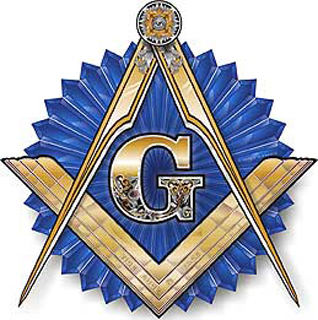
Shiva, or Great Geometer. (The "G" in the Masonic ring can refer
to God; it can also refer to geometry.) Masons claim that the actual name
for God has been lost (cf. Jn. 14:8,9; Phil. 2:9-11; 1 Jn. 5:20).
3. Jesus Christ. The name of Christ is seldom referred to
in Masonic literature, apparently due to Masons not wanting to offend
their non-Christian members. Some Masonic leaders even teach that the
Messiah will not be an individual, but "the perfection of the human
race." One such leader thinks that the stories about various Messiahs
have their origin in the most ancient of religious beliefs -- Solar
Worship. Masons, therefore, consider the discussion about the deity of
Christ to be an endless, futile argument. When quoting from the Bible,
references to Christ are omitted, and prayer is never allowed to be
offered (in a "well-ordered" lodge) in the name of Jesus
Christ. Masons do not care whether a person privately petitions God
or Jehovah, Allah or Buddha, Mohammed or Jesus, the God of Israel or the
"Great First Cause," but in the Lodge, the only petition allowed
is to the "Great Architect of the Universe." Clearly then,
Freemasonry does not believe that Jesus Christ is God, nor that salvation
is available only through Him (cf. 1 Jn. 4:3). Freemasonry is a
religion without a Savior.
At the heart of Masonry is a secret Luciferian doctrine which a Mason only
comes to understand as he reaches the higher levels. Manly Palmer Hall,
another of the great authorities on Masonry, writes, "When the Mason
... has learned the mystery of his Craft, the seething energies of Lucifer
are in his hands. ..." (Manly Palmer Hall, The Lost Keys of
Freemasonry, p. 48). The Apostle John warned that those who deny
that Jesus is the only, all sufficient Christ, and that He came once and
for all in the flesh, have embraced the spirit of Antichrist (1 Jn.
4:1-3). That Jesus was not the Christ, but that He had attained to the
state of "Christ-consciousness" available to all mankind, is
again part of Masonry: "Jesus of Nazareth had attained a level of
consciousness, of perfection, that has been called by various names:
cosmic consciousness, soul regeneration, philosophic initiation, spiritual
illumination, Brahmic Splendor, Christ-consciousness" (Lynn F.
Perkins, The Meaning of Masonry, CSA Press, 1971, p. 53).
4. Sin. Sin is seldom referred to in Masonic literature.
The reality of sin in the Biblical sense is denied (much like the
Christian Scientists); Masons think that any "shortcomings" can
be overcome by greater enlightenment. Yet in attaining the degree of
Master Mason, the symbolism implies that a person is redeemed from the
death of sin and sin's pollution. [HJB]
5. Salvation and Future Life. Masons think that salvation refers
to being brought from the material to the spiritual; i.e., when man
returns to "his forgotten inherent spirituality." Masons believe
that the degree of Master Mason is symbolical of old age, which allows a
person to happily reflect on a well-spent life and to "die
in the hope of a glorious immortality." Because they deny the reality
of sin, Masons see no need of salvation in the Biblical sense. They see
salvation as a step-by-step enlightenment, which comes through initiation
into the Masonic degrees and their mysteries.
In the 19th degree of Scottish Rite Freemasonry, the initiate is told that
attachment to Masonry's "statutes and rules of the order" will
make him "deserving of entering the celestial Jerusalem
[heaven]." In the 28th degree, he is told that "the true Mason
[is one] who raises himself by degrees till he reaches heaven" and
that one of his duties is "To divest [him]self of original sin
..." Masons clearly teach a salvation by works, or character
development, not a salvation by faith in Christ alone.
Even in the 32nd Degree, a Mason never can nor will find the
"light" he is looking for.
THE
BANK of ENGLAND
In 1789 Alexander Hamilton became the first Treasury Secretary of the United States. Hamilton was one of many Founding Fathers who were Freemasons. He had close relations with the Rothschild family which owns the Bank of England and leads the European Freemason movement. George Washington, Benjamin Franklin, John Jay, Ethan Allen, Samuel Adams, Patrick Henry, John Brown and Roger Sherman were all Masons.
http://www.globalresearch.ca/the-federal-reserve-cartel-freemasons-and-the-house-of-rothschild
http://www.bilderberg.org/masons.htm
http://listverse.com/2012/11/21/top-10-scandalous-freemason-secrets/
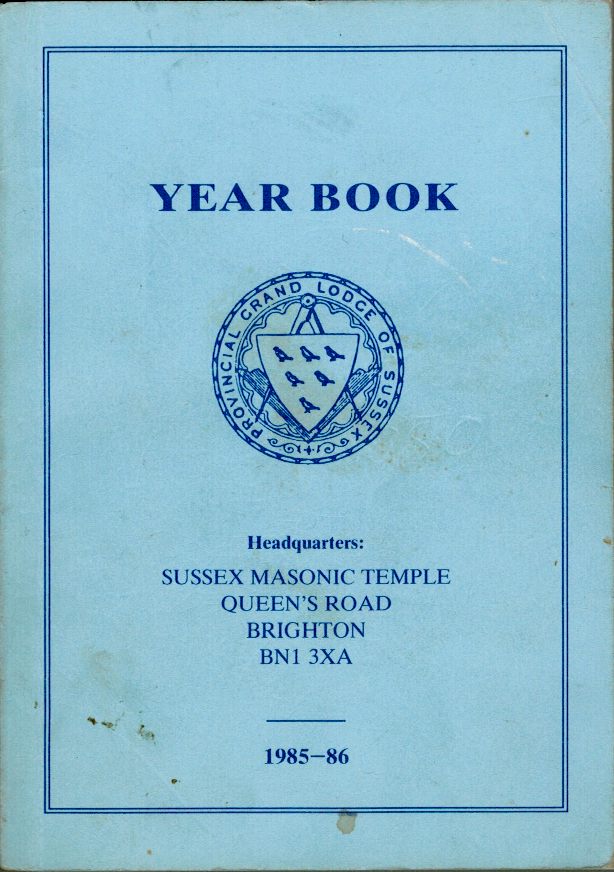
SUSSEX
MASONS - The burning question is how many of the chiefs in Sussex
Police are masons, and how many other councillors or officers of Wealden
District Council are masons? It is probable that once the characters in
this drama are identified, that we might have a clearer picture of how
it was that the Sussex Police failed to investigate 12 independent
claims of council corruption in 1997 from the Wealden
Action Group (WAG). Readers should be
aware that not a single statement was taken from the complainants by
Sussex Police, nor were any of the 12 complainants contacted by the
police to view their evidence. Yet, Sussex Police put this entirely
un-investigated series of crimes to the CPS as if they had been
investigated. It is alleged that then, the police provided blank sheets of their headed
paper to the council they were supposed to be investigating, for them to
be able to write what they wanted about themselves. This is organised
crime, plain and simple, this revelation witnessed by Richard de
Rivaz,
a WAG member at that time.
SUSSEX
POLICE
Many
policemen are Masons. This can lead to corruption at high levels,
where fellow Masons, members of the public, might obtain favours, charges
dropped, or charges brought against someone, as examples.
The law is
quite often used incorrectly (illegally) to further the objectives of
private causes. But who is there to investigate? Since many, if not most
high ranking officers are Masons, in whichever force, even an outside
force is unlikely to identify an officer who will make any effort to
investigate a fellow officer. It's a club, for a favoured few who
will do anything to protect their ranks from outsiders
bucking the system.
Our fonder was one of those who bucked the system, and when he fell foul
of a Mason's family, that was when he became the subject of unwanted
attention.
'The
System' is a fictional work inspired by a true story. The names and
locations have been changed to protect the identities and characters both
living and dead. The book offers an insight into several aspects of the
British planning and legal judicial systems and once targeted by those in
authority, anyone can have their lives destroyed as those in
authority bring to bear unlimited resources against their victims. Our
founder is a victim of masonic abuse. One officer questioned about his
masonic links denied that he was a mason. What of Paul Whitehouse and Ken
Jones?
FREEMASONS
IN THE POLICE - THE GUARDIAN, NICK DAVIES 1997
Today the Guardian publishes for the first time what we believe is a unique photograph. It pierces the wall of secrecy which surrounds one of Britain’s most mysterious organisations by revealing a large gathering of London policemen wearing the white gloves, embroidered sashes and lambskin aprons of the worshipful order of freemasonry.
At the time that the picture was taken, these 60 men were members of Masonic Lodge number 9179, known as the Manor of St James, which was founded eleven years ago, on January 27 1986, for the exclusive use of Scotland Yard officers who had worked in the West End of London. The picture, which has been leaked to the Guardian by non-Masonic Metropolitan police officers, appears to have been taken at one of their inaugural meetings and includes men who then occupied some of the most powerful jobs in the force.
Since April 1985, when Sir Kenneth Newman was Commissioner, Scotland Yard have been advising their officers to stay away from the lodges. According to The Principles of Policing, which was produced under Sir Kenneth: “The discerning officer will probably consider it wise to forgo the prospect of pleasure and social advantage in freemasonry so as to enjoy the unreserved regard of all those around him. It follows from this that one who is already a freemason would also be wise to ponder from time to time whether he should continue as a freemason.”
And yet the Manor of St James is still active. On Monday of this week, a Guardian photographer caught dozens of former and serving police officers as they made their way through the crowded pavements of St James’s Street, off Picadilly. Wearing dinner jackets and carrying their Masonic regalia in flat black brief cases, they converged on number 86, an imposing sandstone building which looks like any of the gentleman’s clubs around the corner, in Pall Mall, but which is in fact the site of a Masonic temple.
Inside, they gathered to hold their annual ritual to install a London policeman as the new master of the lodge, to elect other police officers as their stewards, tylers and almoners, and to consider the names of prospective new members, all of them drawn from the past and present ranks of the Metropolitan Police, all of them willing to be blindfolded with a noose around their neck and a dagger to their heart while they are warned that if they break their vows of secrecy and loyalty, they will have their throats cut and their tongues torn out by the root. And then, until late into the night, they dined together.
The leaking of the photograph co-incides with new efforts by politicians and senior police officers to meet public concern about the role of freemasons in law-enforcement. Masons insist that they are misunderstood and that their organisation stands for service to “our God, our country and our laws”. Critics fear that the secrecy of the organisation and its stern oaths of “mutual defence and support” conflict with a police officer’s need to be seen to apply the law impartially.
The Police Complaints Authority, which says its own ranks are free of masons, is pressing for a new law to compel police masons to declare their membership on a register of interests. Last October, the Association of Chief Police Officers, ACPO, supported the move. And today (Jan 29), the House of Commons Select Committee on Home Affairs continues its own inquiry into the issue, taking evidence from ACPO as well as from the Police Federation, which represents lower ranks and which is fighting for the status quo. Until now, the issue has been as secretive as it has been controversial.
The evidence of the membership of the Manor of St James is that freemasonry reaches high into the command structure of the Metropolitan Police. Among the founder members of the lodge was Gilbert Kelland, who was in charge of all of London’s three thousand detectives when he was the Assistant Commissioner for Crime from 1977 to 1984. He is pictured here in his regalia, in the third row back, three from the right.
Among his worshipful brothers who joined the lodge, in spite of Sir Kenneth’s request, are two Deputy Assistant Commissioners, Peter Nievens and Edgar Maybanks; twelve commanders, including George Churchill-Coleman and Jim Neville, both of whom headed the Anti Terrorist Squad, and Malcolm Campbell, who was the head of Scotland Yard’s intelligence branch; John Cass, who was a Scotland Yard commander before becoming co-ordinator for the nation’s regional crime squads; at least two dozen chief superintendents; a dozen superintendents; and more than a score from the lower ranks.
One of the few officers in the lodge who did take Sir Kenneth’s advice is Tony Speed, who is now the Assistant Commissioner for Central London. He said last week that he had followed his father and grandfather into the Craft, joining his first lodge when he was 21. “There was no furore about it in those days and I have to say that in something like 20 years as a mason I never came across anything that made me feel ashamed or that I felt was wrong. But then about ten years ago, the public perception began to change and we were advised that we should reconsider our position and so, simply because of this problem of perception, I resigned.”
Most of his colleagues in the lodge did not see it that way. Malcolm Campbell is still serving as a commander and has not resigned from the lodge but says that he no longer attends its functions. Many of the others in the picture are now retired although sources who know the Manor of St James say they have been joined by a steady stream of serving officers.
Martin Short, author of the most detailed account of modern British freemasonry, Inside The Brotherhood, estimates that 20% of London officers belong to Masonic lodges. He says there is cause for concern about this and in December, he gave evidence to the Select Committee inquiry of a case he had researched recently in Lancashire which, he told them, “demonstrates just how badly the administration of justice can go wrong when police, Crown Prosecution solicitors and private citizens are all in the same Masonic lodge.”
This story began one night in 1988 when two Leicester businessmen were taking a late-night drink in a hotel in Blackburn. A group of burly strangers in dinner jackets ordered them out of the bar. The Leicester men declined to go. The strangers then announced that they were policemen and proceeded to beat them up. They then called other police who arrested the two Leicester men and charged them with assaulting police officers. When the Leicester men were released on bail the next morning, they found that the hotel manager had seized their belongings until they agreed to pay for damage caused by the fight and that someone had let all the air out of their car tyres and removed their hub caps.
The Blackburn police and Crown prosecutors pursued the case to court, where the two Leicester men faced substantial jail sentences for allegedly assaulting policemen. But the case fell apart. The jury rejected all of the police evidence and found that the Leicester businessmen were not guilty of any offence at all. The judge signalled his own view by taking the unusual step of ordering that the defendants’ costs should be paid out of the public purse. The two men then sued for assault, wrongful arrest, malicious prosecution, conspiracy to injure and libel. In an out-of-court settlement, they were awarded £170,000, most of which was paid on behalf of the policemen by the Lancashire force.
Martin Short told the Select Committee that freemasonry was at the heart of this case. The two Leicester men had stumbled into the tail-end of a Masonic event, a dinner organised by the Victory lodge of Blackburn. This lodge, said Short, is dominated by police officers: the policemen who were involved in the original fight, the officer who subsequently investigated the incident, a senior official in the Crown Prosecution office which handled the case, and the manager of the hotel where the dinner took place were all members of the Victory lodge.
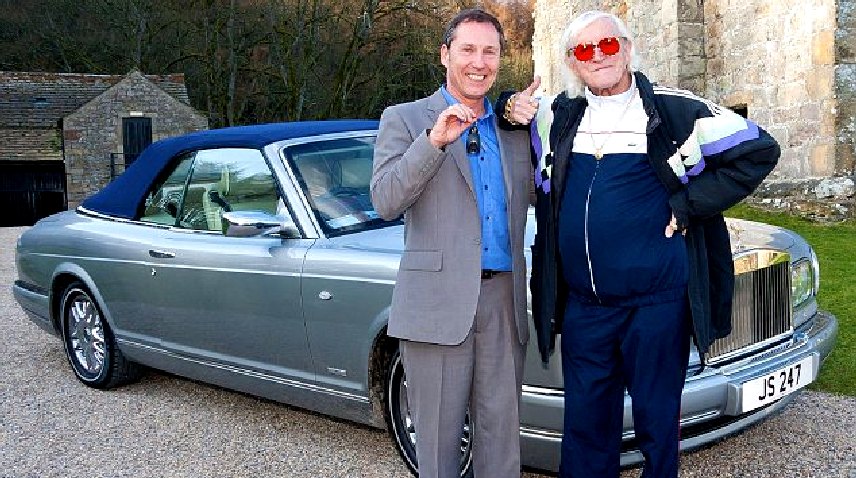
BRUCE
ON POLITICS - Who is in the freemasons? Allegedly and according to rumour it contains several members of the Royal Family, most Prime Ministers, most policemen, most of
MI5, many MPs, most judges, many lawyers, many newspaper owners and many senior civil servants. The organisation recruits people in positions of power. If this were all the case then freemasons would comprise a secret power structure within Britain, who could act without our knowing. These people have supposedly sworn many secret oaths to put freemasonry and brother freemasons before all else, including the law.
Why do people join? Self advancement and power are the most obvious. In some organisations there is allegedly a glass ceiling in promotion that requires freemason membership. Also there is the possibility that freemasonry takes people beyond the law. So criminals can act with impunity. London gangster Kenneth Noye was the master of a lodge and was untouchable till he killed someone in public. Other freemason gangsters were not so silly.
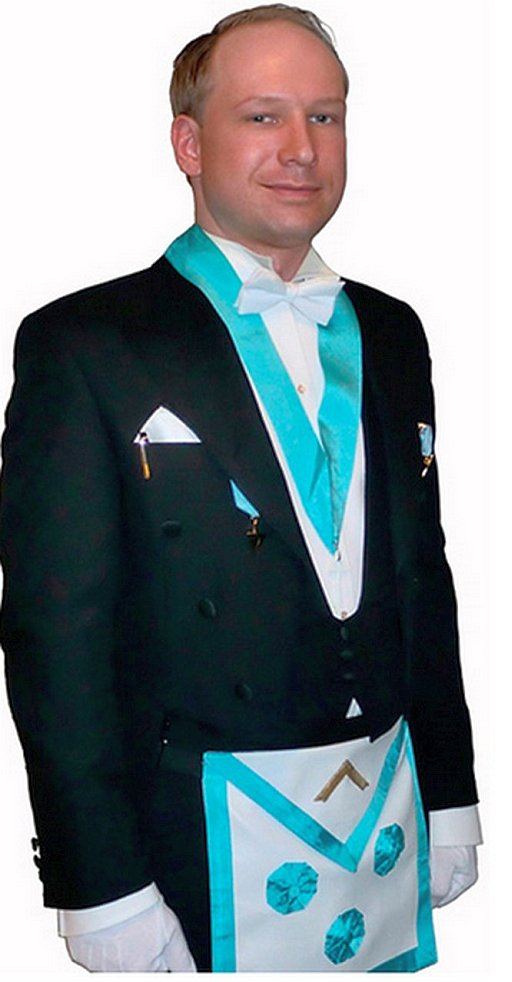
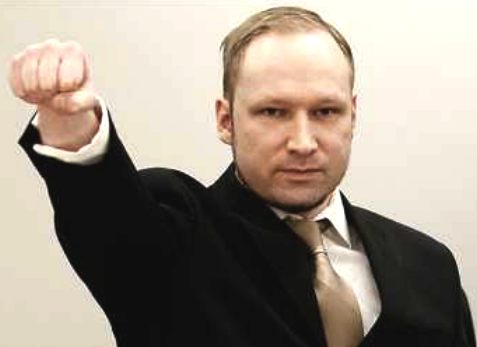
Freemasons also seem to have a penchant for mass murder. The following are all thought to possibly be freemasons: Harold Shipman, Thomas Hamilton (Dunblane), Anders Behring Breivik, Fred West and Peter Sutcliffe (Yorkshire Ripper).
It is important to point out that correlation does not imply causality. In Australia the annual
shark bite and ice cream sales graphs follow very similar curves. Only a fool would say that they are directly related.
Also it is important to know that the freemasons are a secret organisation. We don’t know who their members are and what they do. It might just be a knitting circle for pregnant women. So this whole article is just about pure speculation.
So who is in the freemasons? Allegedly and according to rumour it contains several members of the Royal Family, most Prime Ministers, most policemen, most of MI5, many MPs, most judges, many lawyers, many newspaper owners and many senior civil servants. The organisation recruits people in positions of power. If this were all the case then freemasons would comprise a secret power structure within Britain, who could act without our knowing. These people have supposedly sworn many secret oaths to put freemasonry and brother freemasons before all else, including the law.
Why do people join? Self advancement and power are the most obvious. In some organisations there is allegedly a glass ceiling in promotion that requires freemason membership. Also there is the possibility that freemasonry takes people beyond the law. So criminals can act with impunity. London gangster Kenneth Noye was the master of a lodge and was untouchable till he killed someone in public. Other freemason gangsters were not so silly.
Freemasons also seem to have a penchant for mass murder. The following are all thought to possibly be freemasons: Harold Shipman, Thomas Hamilton (Dunblane), Anders Behring Breivik, Fred West and Peter Sutcliffe (Yorkshire Ripper).
Here is a list of names that have been reported to be freemasons, obviously this could just be scurrilous tittle tattle: Sir Jimmy Savile, Sir Cyril Smith,
Max
Clifford, Rolf
Harris, Paul Gadd (Gary Glitter), Stuart Hall, Owen Oyston and Alan Freeman. You might notice a bit of a trend here.
Which brings us nicely to to alleged freemason paedophilia within Westminster, both historic and current. Obviously, such is the power of freemasons, they could have suppressed the knowledge of this for all time and some would say that they nearly did. It has come to light mainly because of the online investigative news website Exaro News and because of the insistence and diligence of the MP Simon Danczuk. Our mainstream media have been reluctant at best to tell us what they must know. As things stand 141 MPs have asked for an inquiry into matters. Obviously these MPs are not freemasons!
The accusations centre around industrial scale abuse of children who were in local authority care, whose safety was the responsibility of government. The locations include: Haut de la Garenne in Jersey, Kincora boys home in Northern Ireland, Bryn Estyn in North Wales, Cambridge House in Rochdale, Elm Guest House in London and many more across Britain. In many cases there have been investigations and every single time it looks like those investigations could have been sabotaged. Who has the power to do that?
Bryn Estyn is interesting because a victim and a former policemen (in interview) confirmed that it was freemasons:
Elm Guest House is interesting in that the landlady Carol Kasir drew up a list of the alleged attendees to alleged paedophile parties there, this list comprises mainly of obvious freemasons (if our suppositions about freemasonry are true). You can Google this list to see it for yourself. It is a freemason tactic to pour derision and scorn on critics, you can see them do it on social media. So it is no surprise that Kasir’s list has been the subject of such treatment.
So now for some pure speculation, why do freemasons like paedophilia, if of course they do?
* Freemasonry attracts people who like power. Paedophilia is a form of power.
* Paedophilia forms part of the structure of freemasonry. Maybe only in the higher degrees.
* Paedophilia is a shared secret adding to all the other masonic secrets, strengthening their bond.
* Paedophiles join the freemasons to get protection from the police and from the law.
* The hocus pocus and charades that make up freemasonry engender an attitude that encourages paedophilia.
Now into the realm of utter pure rumour and speculation and that is the deaths surrounding this paedophilia. Carol Kasir died under extremely suspicious circumstances once she started telling the wider world about Elm Guest House. Jill Dando was believed to be investigating freemason paedophilia when she was shot. MP Geoffrey Dickens, who compiled a dossier of this abuse had his homes ransacked and his name was found on a hit man’s list. Then there are the child victims who committed suicide as a result of their mental trauma and those who just disappeared. Two (now dead) alleged freemason paedophiles supposedly killed their victims during their sex acts, either for ritual reasons or for enjoyment.
Obviously we need an investigation into all this, both the dreadful acts allegedly inflicted on children and the power of freemasonry within our society. It is self evidently very wrong that policemen are allowed to be freemasons, the conflict of interest is too great and can only damage law and justice in Britain. All public servants who are freemasons should have to state the fact on a register available freely to the public. And this includes politicians, local, national and EU.
If you want to investigate further the Google is your best friend. Searches such as “Max Clifford freemason” or “Bryn Estyn Freemason” will reveal to you vastly more than the brief synopsis here. Many (freemasons) will say that this is all conspiracy theory. But it is very funny that these conspiracy theories are often turning out to be the truth.
No-one is suggesting that all Masonic officers are corrupt or even liable to become corrupt. However, in the past, there have been occasions when Masonic lodges have acted as nests of corruption, where detectives have rubbed shoulders with professional criminals in an atmosphere of friendship and loyalty with disastrous results. When Scotland Yard’s Obscene Publications Squad was destroyed by scandal in the late 1960s, twelve officers were jailed for taking bribes from pornographers. All of them were masons, including the head of the squad, Detective Chief Superintendent Bill Moody, who had even helped one of the pornographers he was supposed to be arresting to become a member of his own lodge.
On the other side of the argument, there have been high-profile examples of Masonic officers fighting corruption. During the Operation Countryman inquiry in the 1980s, it was a Masonic detective chief superintendent, John Simmons, who secretly tape-recorded his brother mason, Detective Chief Inspector Phil Cuthbert, boasting of his villainy and of the involvement of other senior officers in taking bribes and setting up armed robberies. However, Simmons was later ostracised by his lodge, while Cuthbert continued to be welcomed, even after he had been convicted and jailed for three years.
Some of the most angry critics of freemasonry are police officers who do not belong to the lodges. They fear that masons may promote brother officers and conceal each other’s wrong doing and that, on occasion, they might abuse their internal powers to discipline troublesome non-masonic officers. One serving Metropolitan Police detective said: “This is a secret society at the heart of Scotland Yard. I have no doubt that some masons use the lodges to get their way and this is not acceptable for the public or for the police service as a whole.” The Police Complaints Authority says that some officers have approached them privately to voice their concerns about some masonic colleagues.
One non-masonic officer says he reported to his commander that colleagues had invented a fictitious informer so that they could claim reward money for crimes which they solved and then share it among themselves. He claims that he was moved sideways while his colleagues were allowed to carry on and that he subsequently discovered that the corrupt officers and the commander were all “on the square”. Another claims to have heard a superintendent boasting that he was recruiting a new officer to his squad and that he was shortlisting only masons.
The Police Complaints Authority has run into problems with masonic officers. On one occasion a man complained that he had been charged as the result of a masonic conspiracy. He then discovered that the superintendent who was investigating his complaint was himself a mason. The superintendent resigned and was replaced by a second officer who also turned out to be a mason. On another occasion, a provincial Chief Constable simply refused to ask whether one of his officers, who was looking into allegations about masons, was himself a member of a lodge.
Masons played a prominent part in the demise of John Stalker, the former Deputy Chief Constable of Manchester who tried to unravel a cover-up of political shootings in Northern Ireland and in the case of the Scotland Yard Chief Inspector Brian Woolard, who found evidence that his career had been blighted by senior masons after he attempted to uncover the role of civilian masons in a fraud. Masonic officers argue that policemen who want to be corrupt can make bad friendships through golf clubs or Round Table dinners, and that the lodges have no special influence.
When Sir Kenneth Newman produced his advice in 1985, his office considered all of the available evidence. The booklet which he produced acknowledged that the lodges offered friendship, a chance to mix with “some of the most distinguished people in the land” and an invitation to self-improvement. It noted that many of the allegations that were made against them were unsupported or plain wrong. Yet it concluded that some of the allegations were reliable and that the exclusivity of the lodges, the oddness of their rituals and their collection of coded signals amounted to a significant problem. “They militate against the acceptance, by colleagues and citizens alike, of an officer who is a freemason as a man on whose fairness it is possibly to rely always and unquestionably… A freemason’s oath holds inevitably the implication that loyalty to fellow freemasons may supersede any other loyalty.” The worshipful brothers of the Manor of St James disagree.
The two sides of the story came face to face late last year when the current Metropolitan Commissioner, Sir Paul Condon, appeared in front of the Select Committee which is investigating freemasonry in law enforcement. The Commissioner had reassured the committee that all was well but, as he prepared to leave, he was confronted by Chris Mullin, the ebullient Labour MP for Sunderland South, who had acquired his own copy of our photograph. Mullin pulled out the picture and told the Commissioner: “I thought you might like to have a look at your alternative command structure.”
UP
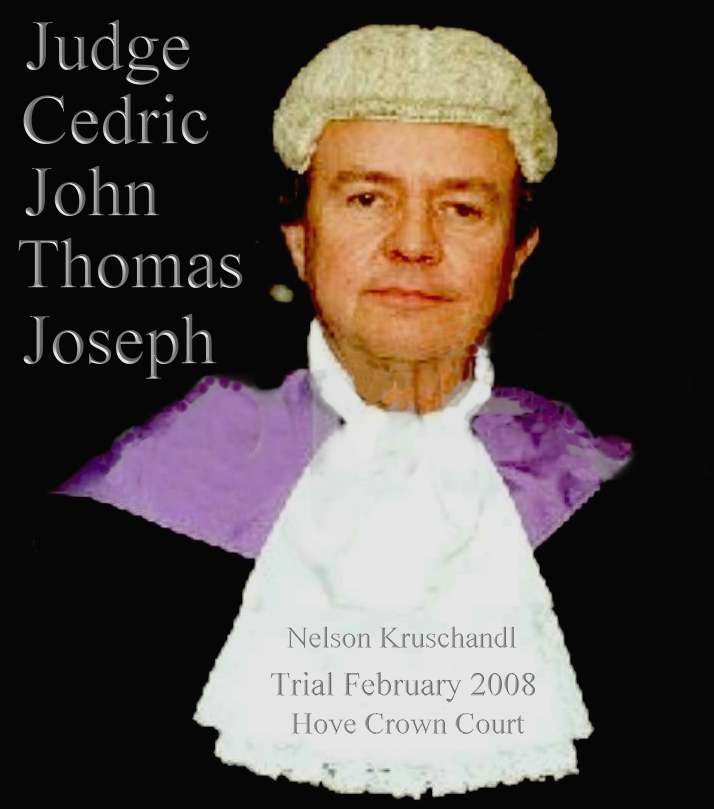
TO 10% OF JUDGES -
According to a Report by Chris Mullin out of the professional magistrates and judges asked to declare whether they were members, more than 5% either refused to say or failed to reply to the request.
Among lay magistrates, more than 14% did not answer the question. The report said on figures given, up to 20% of lay magistrates could be masons and up to 10% of judges and professional magistrates.
41% of Crown Prosecution staff failed to respond when asked about
masonic membership. Silence on the subject is of course an indicator as
to admission. The Report could not rule out significant interference by
Masons in the Criminal Justice System. A masonic link is alleged in the
case of a Sussex conviction, the subject of an ongoing investigation,
where an influential members of the complainant's family is demonstrably
a Mason, not only that, but also a former lodge master.
BBC
NEWS MAY
26 1999 - UK POLITICS CALL TO FREE UP MASONS
Police forces in England and Wales have been accused of being too slow in setting up registers for staff to declare if they are freemasons.
The government says people working in the criminal justice system should state in voluntary registers whether they are masons.
But the Commons Home Affairs Committee has said it is disappointed at the number who've complied.
The chairman of the committee said that legislation may be needed to require members of the criminal justice system to reveal if they are freemasons.
When asked by the BBC if new laws were needed on disclosure chairman Chris Mullin, said: "They'll have to be if anything is going to change."
The MP was speaking after the Home Affairs Committee published its reports into the influence of freemasons on public life.
Mr Mullin said voluntary registration of membership was failing due to "foot dragging" within some branches of the legal system.
But he said his report had found little evidence that freemasons were responsible for miscarriages of justice.
"The excessive paranoia over freemasons has only exacerbated the situation - as far as justice is concerned it is important that it is done, and that it is seen to be done."
The public's faith in this, he said, could be undermined by the presence of a secret society at the heart of the criminal justice system.
Paul Whitehouse of the Association of Chief Police Officers denied police forces were unwilling to co-operate.
He said there was concern within the force over who would have access to the information once it was disclosed.
In its report, the Commons committee expressed disappointment at the slow progress of moves to make members of the police and judiciary declare whether they are masons.
It said: "Such persons should not be allowed to exempt themselves entirely from the process simply by declining to co-operate."
Out of the professional magistrates and judges asked to declare whether they were members, more than 5% either refused to say or failed to reply to the request.
Among lay magistrates, more than 14% did not answer the question.
The report said on figures given, up to 20% of lay magistrates could be masons and up to 10% of judges and professional magistrates.
But it said it had found no evidence of masonic links to miscarriages of justice.
In the case of the disbanded West Midlands Serious Crime Squad, the report concluded that freemasonry was not a primary cause of the squad's problems "although we cannot entirely exclude the possibility that it may have been a contributory factor".
The Grand Lodge confirmed that eight masons had belonged to the squad, two of whom had featured in allegations of corruption although they had never been charged or disciplined.
Another eight masons and a very high-ranking former mason were identified as being involved in the Birmingham pub bombings investigation, which led to one of the country's worst miscarriages of justice.
Although masonic influence was ruled out as a factor involving police officers, it "could" have been a factor in the "close and unprofessional relationship" between a forensic scientist and police.
But the report concludes it was unlikely to be a "significant factor" in the miscarriage of justice.
Links were also investigated between freemasonry and the "Stalker affair", in which Deputy Chief Constable of Manchester, John Stalker, was removed from heading an inquiry into whether security forces in Northern Ireland were shooting to kill.
Two out of seven high-ranking police officers involved in the affair were or had been masons.
The report concluded that on the basis on information supplied, it could not conclude freemasonry played a significant part, nor rule it out completely.
The report has been welcomed by the United Grand Lodge of England, which claimed it was a "vindication".
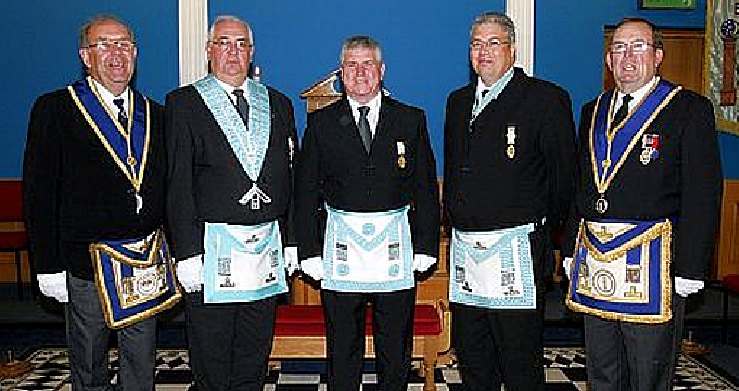
THE
INDEPENDENT 27
JUNE 2000
Senior police officers have defied official disapproval and established a new Masonic lodge despite widespread public fears about the influence of the secret society on the criminal justice system.
The police-only lodge has been set up by officers from the West Mercia force area which covers Herefordshire, Worcestershire and Shropshire.
The West Mercia Lodge No 9719 was consecrated on 10 June in the village of Craven Arms, near Ludlow, Shropshire, with more than 200 seniorMasons in attendance. It is the 11th police-only lodge in Britain and the second in the West Midlands area - the other is in Worcester.
A list of "founders and first officers" of the lodge named 34 serving and retired officers in the lodge of the rank of chief inspector downwards. A further 11 officers are expected to join at the next meeting, which will take place in September.
Peter Neyroud, Assistant Chief Constable at West Mercia, confirmed that one of the new lodge's officers wrote to him in February to inform him of the move, but the force is clearly unhappy about it. "The constabulary would not encourage officers to become Freemasons in view of widespread public concerns over the need for transparency in police relationships with the community," Mr Neyroud said.
"If, despite this, officers make the individual decision to become Freemasons, the force would strongly encourage them to register this membership in the existing register of individuals' interests."
There has been growing public suspicion about the grip of Freemasonry on police officers. Following a number of scandals, in which Masonic influence was alleged - such as the investigation into the West Midlands Serious Crime Squad in the early Nineties - many people believe the all-male society has malign influence over some parts of the criminal justice system.
The first worshipful master of the lodge is Chief Inspector A W Sykes, who is based in Shrewsbury. Mr Sykes declined to comment. John Hamill, of the United Grand Lodge, said the Masons thought Mr Nayroud's fears were "ill founded".
Police chiefs have been split over how to respond to growing pressure from ministers and MPs for officers to declare whether they are Freemasons.
The Chief Constable of Merseyside, Norman Bettison, launched a general register of officers' interests by writing to his force last summer stating that he had no reason to question the integrity of Masons and he had good friends who were members of lodges.
The Chief Constable of Norfolk, Ken Williams, has said he does not believe membership of the Masons is compatible with being a police officer, primarily because of the public's negative view of the society.
The Commons Select Committee on Home Affairs ran an inquiry into Freemasonry in 1998-1999, and last year Jack Straw, the Home Secretary, announced a trial voluntary register for police officers to declare if they were Freemasons. Parallel steps have been taken for judges, probation officers and Crown Prosecution Service staff.
West Mercia said the force had a register of officers' outside interests but it was not a public document. It refused to say how many of the new lodge had declared membership of the Masons.
A member of the select committee, Robin Corbett, Labour MP for Birmingham Erdington, said the signs were that the voluntary register had failed. "We now believe that a register needs to be mandatory and public," he said, adding that the Home Office was a year overdue in responding to the committee's report.
"We are aware we owe the committee a response which we hope to deliver shortly," a Home Office spokesman said. "We would consider primary legislation if the voluntary arrangements proved to be ineffective."
JOHN
TULLY - A
Metropolitan police officer who is a confirmed Mason. It seems to us
that the police forces in the UK are running rings around the system
where there is an obvious conflict of interest, thumbing their noses at
victims of masonic abuse. Where many judges and prosecutors are also in
the mix, there is real scope for wrongful convictions to be ordered.
Masons in the system with authority will more than likely seek to cover
their tracks by ordering non-masons to arrest and interview their
targets, then make sure that any evidence to show innocence is not
included in a case. If they can arrange for a Judge who is also a Mason,
or a Judge who has masonic friends to hear a case, that would then
complete the veil of cover-up so that during a casual look at any
allegation, there would appear to be no masonic connections, when in
fact the whole charade is a masonic exercise asserting their power with
almost complete immunity guaranteed by the state.
The
hallmarks of such a conspiracy are that the victims are tagged by the
police as serial complainers. With this tag in place, untainted officers
who might otherwise have investigated a complaint, are being instructed
to drop the matter. In some cases, police officers attending a site will
have been coached as to how to fend off allegations that that would
otherwise respond to, and use all the evasive answers that they can
muster, the favourite being that: "this is a civil matter." If
you have experienced this, welcome to the club. You are a victim of
masonic influence.
THE
TELEGRAPH 20
AUGUST 2011 - FREEMASONS LEAD ATTACK ON CAMERON'S RIOT RESPONSE
Leading police officers have set up a national Masonic lodge where they can meet in secret in defiance of fears about the influence of the secret society on the criminal justice system.
The founding members include senior officials from the Police Federation, the police staff association, which is currently fighting the Government over its plans to cut budgets.
The new Masonic lodge is led by John Tully, a Metropolitan Police officer, who has given numerous interviews in recent days accusing the Prime Minister of "fighting violence, arson and looting on our city streets with sound-bites".
Other founder members include officers from the Metropolitan Police, Essex Police, Thames Valley Police and from other forces including Northumbria, Dyfed Powys, South Wales, South Yorkshire and even a high ranking officer from the Royal Gibraltar Police.
The "Sine Favore" Lodge was opened despite the conclusions of a Parliamentary inquiry which warned of public fears that "Freemasonry can have an unhealthy influence on the criminal justice system".
The inquiry followed questions about masonic involvement in the abandonment of an investigation into a shoot-to-kill policy in Northern Ireland and with the West Midlands Serious Crime Squad, which was disbanded after evidence of police malpractice.
Membership is open to all serving and retired officers across Britain and others working alongside the police, including lawyers, criminologists and even the financial advisers who manage officers' retirement plans.
The idea for the new police Masonic lodge grew out of a series unofficial get-togethers in hotel bars during Police Federation annual conferences.
Masonic rules require members to do all they can to support each other, to look after each other and to keep each others' lawful secrets.
New members of the so-called Brotherhood are blindfolded, a hangman's noose placed around their necks and they are warned their throat will be slit and their tongue torn out if they break their oath. Critics argue this could put them at odds with discharging their duty to serve the public.
The inquiry by the Home Affairs Select Committee in 1998 called for a public register of police officers who joined the Freemasons, although in the end the then Labour government proposed that officers could make voluntary disclosures about their membership. Few did.
The new "Sine Favore" lodge, is named after the Latin motto of the Police Federation, "Without Fear, Without Favour".
The founders include Police Federation Treasurer Martyn Mordecai, John Giblin, chairman of the Federation's Sergeants Central Committee, and Steve Williams, general secretary of the Federation's Inspectors Central Committee.
Earlier this year Mr Giblin told the Federation's annual conference that government ministers "hate the police service" and wanted to "destroy" it.
Other founding members include solicitor Tristan Hallam, a personal injury lawyer who specialises, according to his firm Russell Jones and Walker, in "road traffic accidents and public liability cases for both private clients and associations including the Police Federation".
Mr Hallam said: "Membership of any organisation is a personal choice. Russell Jones & Walker are aware of my membership."
Stewart Imbimbo, an ex-Thames Valley police officer and now a senior official at Milton Keynes council, Robert Taylor, a financial adviser, Eric Misselke, director of a police credit union which provides cheap loans, savings accounts and insurance, and the Metropolitan Police's resident criminologist Dr Attilio Grandani.
Dr Grandani sits on the Metropolitan Police Authority's equality and diversity sub-committee and is behind the Met's new controversial statistical-led policing model, which aims to combat areas of high crime as opposed to more thinly spread bobbies-on-the-beat territorial policing.
Lodge number 9856 was officially opened by a senior Masonic official, Russell Race. He is the Metropolitan Grand Master, head of the Grand Lodge of London, a corporate financier and chairman of a construction firm behind the huge Westfield shopping centre in west London and The Pinnacle office development, which, when complete, will be the tallest building in the City of London.
The lodge is based at 10 Duke Street in central London, which is also the headquarters of the Supreme Council of the 33rd Degree, one of the most important and mysterious bodies in international Masonic circles, which has an elite membership of only 75 people.
The building, known as Grand East by Masons, contains the "Black Room", the "Red Room" and a "Chamber of Death", used for Masonic rituals.
The Police Federation last night refused to discuss whether any of its officials had disclosed their involvement with Freemasonary.
A spokesman said: "Being a member of any organisation is a matter for the individual, so long as membership of that organisation does not compromise their duties and responsibilities as a police officer."
Lodge Secretary Mr Tully, vice chairman of the Metropolitan Police Federation refused to comment.
By
Jason
Lewis, Investigations Editor
METRO
26 APRIL 2016 - HILLSBOROUGH TRAGEDY, WAS THERE MASONIC INFLUENCE?
An investigation has been launched into whether the secretive Freemasons held too much sway over police decisions at the time of the Hillsborough disaster.
The fresh inquests into the disaster heard Chief Superintendent David Duckenfield had been a Freemason since 1975. He was made a ‘worshipful master’ – head of his local lodge – in 1990, one year after the 1989 tragedy.
He was also promoted within South Yorkshire Police in the weeks before the disaster, but he told the inquest he did not know if his membership of the Freemasons had influenced this.
‘I would hope not,’ he said.
Jurors heard Duckenfield’s predecessor Brian Mole, who is now dead, was also a member of the same masonic lodge.
Now the IPCC (Independent Police Complaints Commission) is looking into concerns from the victims’ families about police officers being members of the so-called ‘secret society’.
The United Grand Lodge of England (UGLE) – the headquarters of Freemasonry in Britain – has provided assistance by handing over historical attendance records.
Investigators are using this to see if there was any correlation with people involved in decision-making around Hillsborough.
A police constable also told the inquest hearings in Warrington that he’d heard ‘a substantial meeting’ of senior officers – which allegedly included Duckenfield – in the days after the tragedy.
The officer said there were rumours that most of those officers were Masons, and that they were trying to pin blame on Superintendent Roger Marshall for asking for the exit gate at Leppings Lane to be opened.
However coroner Sir John Goldring warned the jury that there was ‘not a shred of evidence’ that this meeting actually took place, or that those named were all Freemasons.
Ashitha Nagesh for Metro.co.uk
LEAKED
REPORT - World Bulletin / News Desk
- A leaked report from Scotland Yard has revealed that the Freemasons recruited corrupt police officers into criminal gangs.
More details of corruption in the British police and judiciary are being released after a top secret document was leaked to a local media source over the weekend.
On Saturday,
The Independent Newspaper published details of Operation Tiberius, an intelligence report from 2003, showing that criminal gangs had infiltrated the police and judiciary, as well as revealing instances of corruption and bribery.
On Monday the newspaper revealed further details from the leaked Scotland Yard document, stating that members of the Freemasons secret society who had infiltrated the police force were recruiting corrupt officers into criminal gangs.
Prince
Edward, the Duke of Kent, who is the Grand Master of the secret brotherhood in England and Wales, is yet to comment on the allegations. The United Grand Lodge of England has also refused to comment on his behalf or on behalf of the organization.
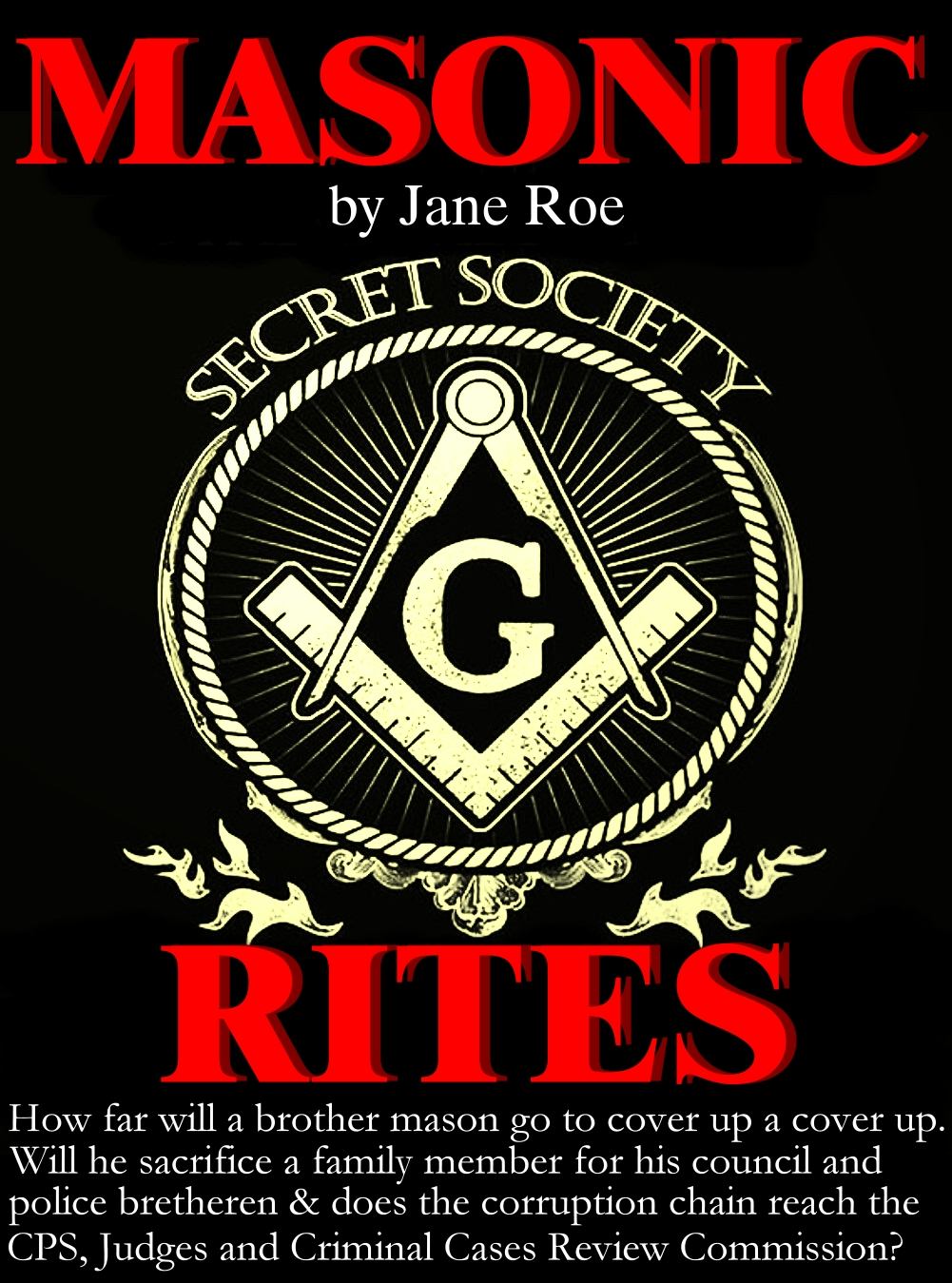
BROTHERS
IN ARMS - Just
how far will a brother mason go to help another mason? Will he sacrifice
the mental
state of a family member to help the police and his council cover up
a cover up. Just how far up the justice
chain does masonic influence extend. Does it include Judges, the CPS and
Criminal Cases Review Commission. In this book by Jane Roe, the
machinations of the justice system are explored where police
corruption and lack of transparency reach as far as the High Court. Based
on a true story, the names and locations of the characters have been
changed to protect the victim of a frame-up who was sent to prison for rape,
where the girl making the claim was still a virgin.
The British
justice system is so corrupted that the Crown
Prosecution Service still managed to gain a conviction for their
brother mason where one of the most corrupt
police forces in England needed to cover up their cover up of council
planning frauds. There is no right of appeal in the United Kingdom in
denial of Article 6 of the Human
Rights Act 1998, because the criminal justice system has been pared
to the bone to counter prolific Government borrowing that the nation
cannot afford. The Criminal Cases Review Commission openly discriminate
between cases where incompatibility in referrals are commonplace, signaling
favours for masonic chums in the provinces. Copyright © cover design
Horse Sanctuary UK 20 October 2018. All rights reserved.
A
- Z OF SUSSEX POLICE OFFICER INVESTIGATIONS
Aran
Boyt
Chris
Sherwood
Colin
Dowle
Jo
Pinyoun
Joe
Edwards
Giles
York
Gordon
Staker
James
Hookway
Kara
Tombling
Ken
Jones
Martin
Richards
Neil
Honnor
Olivia
Pinkney
Paul
Whitehouse
Robert
Lovell
Sarah
Jane Gallagher
Sir
Ken Macdonald QC
Timothy
Mottram
The
above is just a few of a number of persons likely to be investigated in
respect of certain cases brought against Wealden Action Group members, on
the instigation of known Masons, councillors, or
planning
officers, many
of which are themselves Masons.
LODGES
Provincial
Grand Lodge, Brighton,
Sussex
Tyrian
Lodge, South Street, Eastbourne
LINKS
& REFERENCE
http://www.worldbulletin.net/haber/126822/freemasons-involved-in-uk-police-corruption
http://news.bbc.co.uk/1/hi/uk_politics/352109.stm
http://metro.co.uk/2016/04/26/hillsborough-tragedy-did-the-freemasons-influence-the-police-5842965/
http://www.telegraph.co.uk/news/uknews/law-and-order/8713343
/Freemasons-in-the-police-leading-the-attack-on-David-Camerons-riot-response.html
http://www.bruceonpolitics.com/2014/07/07/freemason-paedophilia/
http://www.westlancsfreemasons.org.uk/brian-raine-celebrates-50-years-in-freemasonry/
https://www.youtube.com/watch?v=0hX-NxBVvZA
https://www.youtube.com/watch?time_continue=18&v=pUm2vGX_aSU
http://www.independent.co.uk/news/uk/this-britain/police-defy-force-with-masonic-lodge-5370907.html
http://www.internet.lodge.org.uk/other-articles/96-library/otherarticles/243-freemasonry-the-police-and-the-judiciary
MORE
LINKS:
|