|
|
BBC ROUGH JUSTICE
|
|
|
|
It is a widely held view that Simon Hall has been wrongly convicted of murder. It is alleged he was jailed in 2002 on the basis of flawed evidence. Many people have signed a petition and several MPs say it's time to review this case for the potential miscarriage of justice it might be.
There are a number of facts which are important which seem to have been overlooked where Simon was convicted on partial and some might say inconclusive evidence. Namely: the fact that forensic and DNA evidence did not place him at the scene of the crime. They were not his boot prints in the garden. They were not his fingerprints in the house. He had no forensic traces of the scene (glass) on him or his clothes.
Simon was convicted on the basis that he may have possessed clothes made with similar fibres to those found in the house. It is believed that around 35,000 people in the UK also possess clothes with similar fibres to those found in the house.
Simon had an alibi throughout the night apart from a short 30 minute drive home in the early hours of the morning, where he had been out partying elsewhere that evening. He was convicted despite having no motive.
The Justice 4 Simon Team - www.justice4simon.co.uk
The Campaign has the support of:
Simon's MP Chris Mole , Bob Russell MP for Colchester, Tony Wright MP for Great Yarmouth, a Forensics Expert from Oxford University , "Innocent" Organisation , Private Eye magazine and the general public.
BBC ROUGH JUSTICE 12/04/07 - Simon Hall
LATEST NEWS DO NOT MISS !!
The Trial
Justice Raffety told a jury of 5 women and 7 men in summing up "there is no direct evidence to prove that Simon Hall murdered Joan Albert and that there is apparent circumstantial evidence and it's up to you how you wish to interpret it".
However, there is a general feeling that the jury might have been misdirected and mislead by the summing up.
The following articles with try and demonstrate how this may have occurred.
Simon Hall's mother, Lynne Hall, was a close friend of Joan Albert. She used to run many errands for Mrs Albert which included taking Rusty, her elderly dog, for walks.
As a result, Simon was aware of Mrs Albert, but he only knew her in passing and had never really met her properly.
The prosecution alleged that Simon Hall considered Joan Albert to be a wealthy woman, and being short of funds himself, decided to rob her.
It was also alleged that Joan Albert would recognise Simon, and that he murdered her for that reason.
However, at the time, the Defence showed in court that his finances were better than ever and that in fact he had just been accepted for a loan in order to buy a car.
Simon Hall's father, Phil Hall told the court that he would have helped his son if his financial situation had been so desperate, and therefore there was no need for Simon to seek money elsewhere.
Family and friends feel strongly, and are adamant, that Simon would not break into someone's house, let alone murder someone after a night out. Beside only a foolish and desperate person would break into somebody's house at 6am, a time when people are starting to wake up. Simon Hall is neither.
The prosecution alleged that Simon Hall could not account fully or properly for his movements between 5.30am and 6am.
Alarmingly, during the summing up, the jury were effectively directed to infer that the murder took place during this "window of opportunity", merely because Simon could not account for his movements during these times.
In fact, it would appear that the prosecution's case was effectively built up around the "window of opportunity", without discourse to any other evidence that might indicate otherwise.
Various neighbours provided statements to the police, and subsequently gave evidence to the court, that they were woken at around 2 am by a "loud noise" coming from the direction of Joan Albert's home. Unfortunately, the jury was rather facetiously directed by the Judge to regard these noises as possibly coming from a "clumsy cat".
This is particularly unfortunate as the Crown's Pathologist could not give a time of death and in fact would not be drawn into the matter.
The fact the there was no time of death should have been highlighted as significant during the summing up, but it was barely mentioned.
Statements from family and close friends describe Joan Albert as being a very habitual person, very set in her ways. One habit that was frequently mentioned was that Joan Albert was known to have a midnight snack. Rusty the dog was old and unwell and needed to be let out several times during the night. Therefore it wasn't unusual for Mrs Albert to have a snack such as a sandwich at around midnight whilst waiting for Rusty to do his business.
Indeed, forensic photographs taken of the kitchen showed dirty plates and implements in the kitchen, suggesting a snack of some sort had been consumed sometimes during the night of the murder.
In court, the defence called a Gastroenterologist to give evidence regarding an analysis of Joan Albert's stomach's content removed during the autopsy. The food traces found were consistent with the idea that Joan Albert had consumed a "midnight snack".
According to scientific research, studies have shown that traces of digested food can still be found in the stomach up to 3h after eating a light meal. In a normal person with no digestive problems, a complete clearing of a stomach contents would take place after about 6 hours. Joan Albert did not have any digestive problem at the time.
Putting this in content, if Joan Albert did indeed have a midnight snack, by the time Simon Hall is alleged to have committed the crime at around 5.30to 5.45, digestion would have been completed and no food traces would have found.
The Gastroenterologist actually came to the conclusion that whenever Joan Albert's last meal was eaten, she would have died within 3.5hours or so- but probably less of consuming it. If that meal had indeed been an habitual "midnight snack" then the time of death could have been no later then 3.30am possibly even as early as 2am, a time which is broadly consistent with the time the neighbours heard the loud noise.
Unfortunately, the jury, yet again, were directed away from this potentially important evidence.
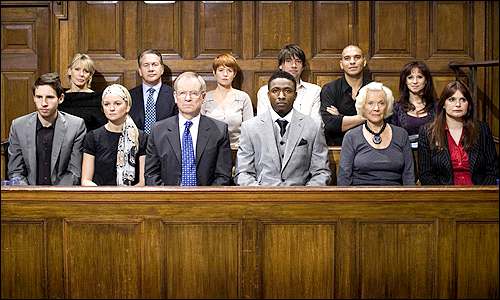
The Verdict - Jury
At the murder scene, no finger prints or DNA that could be attributed to Simon were ever found. In fact there were two sets of finger prints in significant places that still haven't been identified. One set on the kitchen door at about shoulder height, just above where Joan Albert was found and the other on the push plate of a door upstairs.
Crucially, the post mortem showed that an additional number of wounds found on Joan Albert were committed after her death. The crown's pathologist gave evidence to the court that these wounds had been inflected a significant amount of time after death, up to 30 minutes.
It thus becomes apparent, on the crown's own time scale and within the postulated "window of opportunity", that Simon would not have had the time to commit this crime.
Lynne Hall testified at the trial that when her son come home form his night out, there was nothing out of the ordinary, and certainly no blood or any other evidence of violence on him.
It is accepted that the killer climbed over 2 fences to get to the rear garden of Joan Albert 's house, and then smashed the kitchen window in order to gain access. This could have been the loud noises referred to by the 2 neighbours as mentioned earlier.
There were 3 footprints found at significant locations along this route. They were professionally determined, by a forensic scientist called on behalf of the crown, to have been made by town of office shoes, where the heel had small raised squares and a groove around the edge of the sole.
The crown's expert could only give the size as between 6 to 10. At the time, Simon had a size 9 black moccasin style dress shoes, which were determined not to have made any of the three footprints mentioned earlier.
By far, the bulk of the prosecution case was based upon the discovery of a quantity of black flock fibres, commonly used to produce velvet or velour clothing coupled with a much smaller quantity of what was described in court as green polyester fibres.
These fibres were found on Joan Albert's body, along the route the killer took to gain access to her house, on a fence post at the bottom of the garden.
Microscopically indistinguishable fibres were found on the floor of Simon Hall's bedroom wardrobe at his parent's house, some at his house in Ipswich and two cars he had the use of.
Microscopically indistinguishable fibres were also found at two other houses not associated to Simon, but as the numbers were small, the police didn't carry further investigation.
The prosecution alleged that Simon Hall was wearing a pair of black velvet trousers, which possibly could have been brought that morning from Tesco's Copdock, Ipswich . Whist it is true that Simon Hall withdrew some cash from the ATM at Tesco's, he did not enter the store itself. In fact, he was caught on the ATM camera withdrawing cash from the ATM but the entrance CCTV did not capture Simon entering the store itself.
Simon stated that on that night, he was wearing a pair of dark blue jeans, a jumper with a number 4 on it, a leather jacket, a pair of brown ankle boots, nothing black velvety or green.
Gareth Hampson also gave evidence in the court that broadly stated that Simon Hall was thought to have been wearing dark blue jeans and a close fitting jumper.
In fact, whilst there were a number of contradictions and confusions in all the statements that the police took, not one person thought he was wearing black velvet trousers as the prosecution alleged. As a matter of fact, those closest to Simon have no recollection of him ever wearing a pair of black velvet trousers, or indeed any other type of clothing made of the same fabric. The nearest anyone could come up with was a pair of moleskin type trousers, but they were tan, not black.
Mrs Justice Rafferty, in summing up, suggested that the fibre evidence was not disputed.
However, it must be noted that Judith Cunnison, the crown's expert witness established that there were innumerable chain of supply in respect of the black flock fibre, but in this court case, only one supply chain was concentrated on; an Italian manufacturer called Wonder SRL. Over the relevant period of time, 30000 garments were produced for the UK market by this one manufacturer referred by the crown. It can be deduced that it is in fact a quite common material, and this is without recourse to all the other potential supply chains in the world.
At the time there were a significant number of stores in Ipswich and the surrounding area that had garments on sale made with the flock material in question. In fact, taking Tesco as a reference point, 5 relevant garments were sold in the Copdock store in the day or two leading up to the murder and this assumes the garment in question was actually purchased from the Tesco store at Copdock.
Whilst this seems to insurmountable evidence, it is only circumstantial. It must be stressed that even though fibres were recovered, which were described as "undistinguishable" from places common to Joan Albert and Simon Hall, no source garment was ever recovered. In court, it was described how circumstances dictate the possibility that these fibres might have originated from a garment once owned by Lynne Hall, who used to have her own fashion business.
In fact the wardrobe in the bedroom, where the core substance of the fibres were recovered, was once used for storage of garments form this clothes business.
Lynne Hall had been in and out of Joan Albert's home, Simon Hall's cars, and her own home innumerable times so there is every chance that Mrs Hall could have been the unwitting secondary carrier of the fibres which served to incriminate Simon.
During the summing up, the correct definition of "undistinguishable" as used by the crown's expert witness was omitted. The word means from a similar source as opposed to identical as the judge surmised. Therefore, whilst the garment that potentially shed the fibres in Joan Albert's property and the garment that shed fibres at sites common to Simon Hall might have been similar, it does not mean it was the same garment.
It is known that the assailant broke into Joan Albert's home by smashing the kitchen window, possibly with enough force to wake several neighbours. This would have generated microscopic window shards from window glass. However, no glass shards or paint fragments were found at the sites linked to Simon Hall and where the fibres were recovered.
Returning to the broken kitchen window, the widest point in the gap made was measured to be approximately 14".
Simon is over 6 foot tall and quite well built so to have fitted through that gap without even drawing blood or damaging his clothing would have been quite a feat.
It must be mentioned, as confirmed by crown witness in court, that the windows were locked as were the front and back doors, so the broken hole in the kitchen window was the only mean of entry and exit.
No reconstruction was ever made either to determine how easy it would have been for Simon Hall to have climbed through that broken window.
Lynne Hall was doing his washing at the time, any blood on his clothing; rips and so on would have been queried.
Message from Simon - 5 April 07Hello…
It's been a long time since I wrote anything for this website, probably too long but with the airing of the BBC Rough Justice – The Innocent Brief in mind and the massive rise in the profile of this case I thought I should attempt some kind of message. Here goes…
This year is proving to be a good year.
The campaign for freedom gathers pace with the appointment of a CCRC Case Manager and our attempts to raise awareness of my situation reaching levels I never though could be realised.
What started as just a little website giving information to the public and helping me by making me feel that people were working hard for me and I wasn't forgotten, has grown into one of the leading miscarriages of justice websites on the internet today.
It has proven to be such a valuable tool from which we have managed to gain help and support from so many people all over the world including Barristers, Solicitors, Law Students, Politicians, Journalists, film makers, Authors, Doctors, Scientists and even serving police officers, but that was obviously denied!!
All things considered I am okay, if just a little tired and underweight. I've more wrinkles and grey hair but apart from that there is nothing to report. I'm healthy so I mustn't grumble.
My family and friends are still there for me and although some with whom I was once very close seem to have drifted away, others from old have come along for the ride plus new people who have never met me but still send messages and letters of support.
There is nothing better than family and friends; knowing that you are loved and cared about.
Can anything else be more important?
Here's hoping to see you all on the other side of the wall.
Mum, Dad & Shaun – I love you, Steffie – You're amazing, Oli – you legend!
To Campbell Malone, Michael Naughton, Gabe, Made, Jo, Amanda, Jess, Keir Starmer, Peter Bull, Allan Jamieson, Cathy & Josie, Innocent & MOJO, John Hatton, thank you for all your hard work and faith in me,
Last but not least, thank you to all the people out there for your support!
Simon,
LINKS and REFERENCE
The
Miscarriages of Justice Organisation
The
millioncampaignhomepage is inspired by the Million Dollar Homepage,
run by a 21 year old student and entrepreneur called Alex Tew.
Mr.Tew's website was phenomenally successful and his vision of the
website mosaic will revolutionise the way internet space is organised.
As well as being a brilliant concept, the website he created looks
like an internet version of Piet Mondrian's depiction of the vibrancy
of jazz era New York.
Open forum where we have added Simon’s case for discussions / questions. True Crime, World News and Justice: For Readers and Writers
The National Monthly Newspaper for prisoners This is a News Website, allowing people to post their own stories, if you search for Simon Hall, you will see our articles on there, this will hopefully bring even more awareness to the campaign and who knows who might pick this it up. The more views we get on our articles, the more popular our story becomes and the more chances we have of being noticed and bringing Simon home.
To
raise public awareness of wrongful convictions as a continuing cause
for concern, despite the creation of the Criminal Cases Review
Commission. Guidance
Note 10, Improving Prison Healthcare. Duty of care for prisoners:-
The
perfect guide to get you started.
The
Prisons and Probation Ombudsman is appointed by the Home Secretary and
investigates complaints from prisoners and those subject to probation
supervision, or those upon whom reports have been written. The
Ombudsman is completely independent of both the Prison Service and the
National Probation Service (NPS). The current Ombudsman is Stephen
Shaw, and a team of deputies, assistants, investigators and other
staff supports him. Judge
for Yourself is a book that is long overdue - a well researched lay
person's guide to the British legal system's appalling number of
miscarriages of justice.
All-party, Law Reform and Human Rights organisation working to improve the legal system and the quality of justice.
Liberty
The Parole Board is the independant body that protects the public by making risk assessments about prisoners to decide who may safely be released into the community and who must remain in or be returned to custody...
Miscarriages Of Justice UK, another organisation supporting miscarriages of justice.
Manchester based organisation supporting people going through miscarriages of justice. Special THANX to Ann!
ARTICLE LINKS
A - Z of Sussex officer investigations
CONVICTION QUASHED OVER 'MADE UP' VAMPIRE CLAIM
A man who was sentenced to eight years in prison in 2004 after a teenager falsely alleged he repeatedly raped her in "vampire" rituals had his conviction quashed yesterday.
Leon Benjamin Forde, 21, of Lincoln, was jailed 18 months ago after the girl claimed he subjected her to a sex ordeal two years previously, when she was 13. But he won his freedom at the appeal court after the prosecution accepted the girl's testimony was undermined by evidence uncovered from a computer diary which suggested she had "made it all up".
Mr Forde later said his time in prison had been "hell".
TEACHER
CLEARED OF RAPE TOO LATE
after battling to clear her son Darryl's name
The
music teacher, who protested his innocence, died in his cell from an
undiagnosed blood cancer. He had served 18 months of an eight-year
sentence. It comes as government guidance designed to speed up investigations into alleged abuse of pupils is introduced in schools. Unions say this will reduce the risk of innocent teachers being smeared by false allegations.
Chris Keates, general secretary of the NASUWT, said: “This is an extreme and tragic illustration of the consequences of malicious allegations and underlines the need for these new procedures.”
Mr Gee’s 88-year-old mother, Molly, awarded £62,493 costs by the court, said the case should be a warning to other teachers.
“It all boiled down to one girl’s word against his, and the jury believed her,” she said. “That’s all it took to send my son to prison and it has left me very angry and grief stricken. I don’t think anyone should have to work alone with a child – it is just too easy for an allegation like this to be made.”
Mr Gee, a supply teacher who taught brass instruments, was found guilty at Leeds crown court in January 2001 after being accused of raping and indecently assaulting a pupil in a Huddersfield school in 1989. He died aged 55 in August 2002, a month after a second appeal failed.
His
conviction was eventually quashed when his mother alerted the Criminal
Cases Review Commission, which asked a leading psychiatrist to report on
his accuser. The study cast doubt on her mental state. It also emerged
that the girl, now 26, made similar allegations against another man, whose
conviction was quashed earlier this year.
SEX ATTACK LIAR NAMED BY PEER 19th October 2006
A woman with a long history of crying rape who sent an innocent man to jail was named in Parliament amid calls for a change in the law.
Shannon Taylor was unmasked by a peer who told the House of Lords her lies had put father-of-two Warren Blackwell behind bars for more than three years.
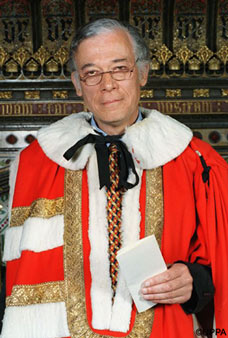
Lord Campbell-Savours
Lord Campbell-Savours used Parliamentary privilege to expose her identity and lambast the 'shabby' police investigation that saw Mr Blackwell imprisoned.
Legal experts praised his decision to speak out to prevent other men falling victim to fake sex attack allegations.
Mr Blackwell, 36, whose loyal wife Tanya never doubted his innocence, was dramatically cleared at the Appeal Court last month after Miss Taylor's background as a serial fantasist was exposed by a Criminal Cases Review Commission investigation.
But although his name was blackened, anonymity laws meant his accuser's was automatically protected, and she became known only as Miss A.
Even the appeal judges wanted to name her - but were powerless to do so - to warn other blameless members of the public.
The Daily Mail led calls for her identity to be revealed before she put another innocent man through torment.
Yesterday, Lord Campbell-Savours - said to be motivated by 'outrage' at the case - stood up and publicly did so.
He asked fellow peers: "Is not the inevitable consequence of the workings of the law, as currently framed, that we will carry on imprisoning innocent people like Warren Blackwell, who was falsely accused by a serial and repeated liar, Shannon Taylor, with a history of false accusations and multiple identities?
"As a result of her accusations, he spent three and a half years in prison following a shabby and inadequate police investigation, and was only exonerated when the Criminal Cases Review Commission inquiry cleared him and exposed her history."
The Labour peer added: "Shouldn't mature accusers who perjure themselves in rape trials be named and prosecuted for perjury?"
Miss Taylor's own daughter backed the decision to disclose her name, saying: "She is a danger and the public needs to be warned. She needs prosecuting for what she did. She is every man's worst nightmare."
Mr Blackwell's ordeal began when his accuser, now 38, claimed she had been seized with a knife outside a village club early on New Year's Day 1999, taken to an alley and indecently assaulted.
She later picked him out of an identity parade and a jury found him guilty, even though there was no forensic evidence against him and he had no previous convictions.
Eventually, the case was investigated by the Criminal Cases Review Commission which found that the woman had made up at least seven other fake allegations of sexual and physical assault, including against her own father. She frequently changed her name and police forces did not realise they were dealing with the same woman.
Her own mother has described her as "a persistent liar, very manipulative and a bully" who frequently claimed to have been beaten, sexually attacked and raped - all of which were untrue. She has a history of mental illness and self-harm.
The original investigation by Northamptonshire Police was exposed as shoddy, with Mr Blackwell's lawyers claiming that normal safeguards and procedures were completely ignored. He plans to sue.
Yesterday, a friend of 63-year-old Lord Campbell-Savours explained why he decided to speak out. He said: "He named her because he was outraged. He doesn't think it's got anything to do with the issue of rape, he thinks it's an issue of perjury.
"This woman made up the story and told lies and he can't see why a person who has perjured themselves should be protected, irrespective of the type of offence.
"Sometimes people have to stick their heads above the parapet in cases where the law is clearly an ass and needs to be reformed.
"He thinks the law around anonymity, particularly where false accusations have been made, needs to be changed."
Welcoming the development, Mr Blackwell, from Woodford Halse, Northamptonshire, said: "It's absolutely fantastic. I didn't think anybody would have the guts to name her.
"This woman needs to be stopped. The fact is, she remains free to carry on crying rape and up till now has been enjoying the full protection of the law. It's absolutely crazy that she could not be named and shamed, because innocent men need to be warned to avoid her like the plague.
"Now I hope she will go on to be prosecuted." But she is unlikely to face charges for perjury or perverting justice.
Northamptonshire Police yesterday claimed there was "insufficient evidence", while Crown Prosecution sources have cited her mental illness as a barrier.
But Mr Blackwell's barrister Anne Johnson said: "There is a clear public interest in her being prosecuted for perjury or the very least wasting police time.
"It's fantastic that somebody of authority has finally come out and named this woman. The issue needs to be aired otherwise nothing will be done."
At Mr Blackwell's appeal last month, Mr Justice Tugendhat admitted that similar tragic cases could follow because of the lies of the 'Miss A', adding that Parliament had not seemed to have considered this possibility when framing the law. Last night the judge said he did not wish to comment on yesterday's twist.
In the 1970s, the Daily Mail campaigned for women in sex cases to be granted automatic anonymity, to protect genuine victims of genuine crimes. Although Miss Taylor has now been publicly named, there is nothing to stop her changing her identity yet again.
Callers to her most recent address were told by her boyfriend that she no longer lived there.
Here's what readers have had to say so far. Why not add your thoughts below?
It is unfortunate that in my opinion women seem to be able to make allegations and men are treated as guilty unless proven innocent. This spills over into family law where this happens all the time. It is time for laws to be changed and the system to be exposed for what it is. I take my hat of to the judge for naming this women. It is about time that more professional people i.e. judges and lawyers started looking at what is right and wrong instead of either following there own political agenda or lining their own pockets.
The sentencing for false accusations of rape should be as harsh, and enforced as harshly, as rape itself.
Warren Blackwell and wife Tanya - Guilty until Proven Innocent
Man freed but serial rape accuser remains anonymous12th September 2006
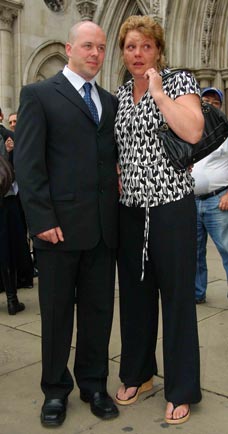
Warren Blackwell and his wife Tanya outside the Court of Appeal
An innocent man jailed for a sex attack was dramatically cleared after it emerged that his 'victim' is a serial liar with a long history of crying rape.
But because of laws that protect her anonymity, judges are powerless to name and shame her, leaving her free to make more false accusations against blameless members of the public.
Mr Blackwell, 36, hugged his loyal wife Tanya and wept as the Appeal Court quashed his conviction.
He described his accuser as "every man's worst nightmare".
Mr Justice Tugendhat admitted, however, that similar tragic cases could follow because of the lies of the woman, Miss A.
"Parliament does not seem to have contemplated this situation.
"There appears to be no means of displacing her entitlement to anonymity."
In the 1970s, the Daily Mail campaigned for women in sex cases to be granted automatic anonymity, but now there are questions about whether the law has gone too far.
Warren Blackwell's nightmare began when Miss A, now 38, claimed she had been seized with a knife outside a village club early on New Year's Day 1999, taken to an alley and indecently assaulted.
She later picked Mr Blackwell out at an identity parade.
There was no forensic evidence against him and he had no previous convictions.
'She needs to be stopped'
Yet Mr Blackwell, from Woodford Halse, Northamptonshire, was found guilty and spent three years and four months behind bars.
Eventually
the case was referred to the Criminal Cases Review Commission (CCRC) which
assigned Detective Chief Inspector Steve Glover, to investigate. He
discovered that the woman:
The Crown Prosecution Service did not oppose the appeal.
David Farrell QC, for the Crown, said: "This conviction is unsafe. What has come out of the woodwork paints a picture of a woman with immense personal problems with serious difficulties in distinguishing between truth and lies."
If this information had been known at the time of the trial, he added, "this case would not have made it off the ground".
Mr Blackwell said: "Clearly something has to be done about this woman. She needs to be stopped. The prosecution say she is psychiatrically disturbed, but insane people who murder are tried and if found guilty put away."
Mr Blackwell, who plans to sue police over his ordeal, will now have his name removed from the Sex Offender Register.
His accuser has a history of mental illness and self-harm - once inscribing the word 'HATE' on her body with scissors.
However, because she has changed her name at least eight times, and moved between addresses in at least three counties, it seems police never realised they were dealing with the same woman.
For Mr Blackwell, her accusations meant he missed more than three years of family life. His son Liam, ten, and stepdaughter Holly, 16, were three and nine when his ordeal began.
His 36-year-old wife said: "I never doubted him for a second. We were together six years before it happened, and ever since."
Add your comment | View all Comments (48)48 people have commented on this story so far. Tell the Mail on Sunday what you think using the links above. I
think that most right-thinking people would support a change to allow
these people to be identified. It might even have some deterrent effect. When
you name the accused guilty or not you should also name the accuser. If
his photo is published then so should hers be. Let's have things equal
and fair all round. This
government does not have the time to waste on changing this law they are
all too busy jostling for the top office job.
F.A.C.T.
(Falsely Accused Carers and Teachers)
Guidance
for education staff and volunteers in schools
DIGGING THE DIRT: DISCLOSURE OF RECORDS IN SEXUAL ASSAULT CASES
The disclosure of confidential records such as those of doctors, teachers, counsellors, and therapists may be sought by the defence as a means of undermining the credibility of complainants in rape and sexual assault trials. The procedure is under section 2 of the Criminal Procedure (Attendance of Witnesses) Act 1965, under which disclosure of the records of third parties may be sought.
This may be relevant in cases where a family making accusations are associates of one or more of the expert witnesses.
Wednesday
December 13, 2006 - The Guardian As celebrity themed reality TV goes, it's a long way from making them eat bugs. One of the cornerstones of BBC2's new year schedule will aim to meticulously recreate a high-profile rape trial using top lawyers and following 12 celebrity jurors as they reach their verdict.
But the inclusion on the jury of the likes of former MP turned perjurer, Jeffrey Archer, and Stan Collymore, the former footballer involved in well-publicised domestic violence and "dogging" incidents, has already sparked concern about the motives of the programme-makers from rape charities and support groups.
The Verdict's diverse lineup also includes So Solid Crew rapper Megaman, real name Dwayne Vincent, who was recently acquitted of murder at the Old Bailey after three trials and 18 months on remand, as well as former soap actress Patsy Palmer, the chief executive of Ann Summers, Jacqueline Gold, and Sara Payne, whose eight-year-old daughter, Sarah, was murdered by a convicted paedophile, and who has since campaigned for the so-called Sarah's Law.
They will be charged with determining if two fictional footballers gang-raped an imaginary 19-year-old young woman in a London hotel suite.
"It sounds quite sensational," said Cliona Saidlear, the policy coordinator at Rape Crisis Networks Ireland. "Rather than 12 ordinary people, they've turned to celebrities and instead of taking a standard rape trial, they've used a celebrity case. They've pitched it at such an extreme, sensational level you have to question their objectives. The celebrities are probably going into it with the best of intentions but why not 12 people from the street?" she said.
But the programme-makers insist it is a serious attempt to lift the lid on the usually unseen deliberations of the jury room. They said they were taken aback by the extent to which the celebrity jurors treated the concocted scenario as real.
Stephen Lambert, chief creative officer at Wife Swap and Faking It producer RDF, who came up with the idea, said there was a public interest defence. "Barristers and, I guess, the rest of us, really want to get an insight into how juries make up their mind in such cases. Wearing my public service hat, I'd say it's a great way of showing how a court and a trial work."
BBC2 controller, Roly Keating, also defended his motives. "It's an ambitious project that is attempting to bring the law and the jury system to life in a new way. It's an extremely complex, finely balanced case derived from case law but fictitious in its detail."
The Verdict will be screened over four nights in February on BBC2. After each programme, viewers will be encouraged to switch to BBC3 where they can watch footage of the jury debating the day's evidence over dinner at the five-star Conrad Hotel in Chelsea, where they stayed after being whisked from Kingston county court in Surrey in a fleet of black Lincoln limousines equipped with champagne chilling in buckets. Viewers will be invited to make their own minds up using background material, witness interviews and documentary evidence available on the BBC2 website.
The programme also features a number of celebrity lawyers, including retired judge Lord Dennison. Prosecuting counsel is Joanna Greenberg QC, while the two fictional footballers are represented by real-life QCs Jane Humphreys and George Carter-Stephenson.
Mr Carter-Stephenson, whose notable cases have included the first Damilola Taylor murder trial and the Millennium Dome diamond robbery, said he had been wary at first but was reassured by the lengths to which the programme makers went to make the programme realistic. "I was surprised by just how good the actors were. It was just like being in court, except the lights were a bit brighter," he said. "It gives the public a chance to see how barristers work and to show that we are not so removed from reality as they sometimes believe."
The other members of the jury are Jennifer Ellison, a dancer, singer and former Brookside actor; Michael Portillo, the former Tory leadership contender turned media commentator; Alex James, the bassist in Blur; Dominic McVeigh, a teenage millionaire who made his money from importing scooters from China, the actor Honor Blackman and TV presenter Chris Tarrant's estranged wife, Ingrid.
It is their role to cross-examine a group of actors who improvise their responses as the alleged rape victim, the two footballers, the alleged victim's girlfriend who sold the story to the tabloids, and others.
"We thought first of all about a sexual harassment case, and then a murder case, but then went with rape because it's so clearly two interpretations of reality. It's a hotly debated crime in the legal world," said Mr Lambert.
The case dramatises issues of notoriety, alcohol, race, money and the ethics of selling possibly concocted stories of sexual dalliances with celebrities to the tabloids. The case involves a young woman called Anna Crane from Epsom, who goes to see the musical Chicago with her best friend in London.
After the show they wind up in a hotel cocktail bar where the friend spots celebrity footballer Damien Scott and his friend, a less successful player called James Greer. They retire to Scott's suite where one of two things happens to Anna Crane: either she has consensual sex with Scott or she is gang-raped. Both defendants plead not guilty.
Crane decides not to go to the police. Instead, her best friend sells the story of her alleged rape to a Sunday newspaper for £30,000 and covertly tapes Anna describing the assaults. This tape was played in court to the celebrity jury who have to make up their minds as to whether it is a harrowing confession or a fake tape concocted by two money-grabbing girls.
Archer's appearance is likely to be the first of several in reality TV shows as he seeks to work his way back into the public eye following his four-year jail sentence in 2001 for perjury and perverting the course of justice. He has already agreed to take part in new ITV1 show Fortune, in which he will be filmed giving away his own money to members of the public, and is rumoured to be part of the cast list for the next series of Channel 4's Celebrity Big Brother in January.
BBC Two Winter/Spring 2007
Category: BBC Two 12.12.2006 Stan
Collymore, Ingrid Tarrant, So Solid Crew's Megaman, Michael Portillo and
Sara Payne join the jury for BBC Two's The Verdict A former England football player, one of Britain's most successful businesswomen, a mother who campaigned for the law to be changed following the murder of her daughter and a rapper who spent time in prison on a murder charge are amongst the line-up of high profile jurors taking part in BBC Two's ambitious television event, The Verdict.
The full line up, announced today, is:
The 12 jurors are sitting in judgement on a four day trial in a real courtroom, presided over by a real judge, with real barristers prosecuting and defending.
The jury will then retire to the jury room to begin their deliberations.
But the cameras will be there, observing for the first time the dynamics of a how a jury reaches it verdict.
The Verdict, which is being produced by RDF Television, part of the RDF Media Group, will be stripped across four nights on BBC Two, to be shown early next year.
A BBC Three switch-over programme will follow the jury back to their hotel to find out how they have reacted to each day's proceedings.
The case features the rape trial of an internationally famous footballer, Damien Scott, and his friend, James Greer.
Scott and Greer are fictitious characters, but in the weeks leading up to the case the actors playing them have experienced what is like to be arrested, interviewed under caution by real policemen and examined by real forensic experts.
The trial is totally unscripted so that when the witnesses appear in the witness box, they give evidence about experiences that to them, to the jury, and to viewers will seem all too real.
The judge is the highly respected and recently retired His Honour Neil Denison QC .
Jane Humphryes QC and George Carter-Stevenson QC are acting for the Defence and Joanna Greenberg QC is the Crown Prosecution Service barrister.
The barristers are free to prosecute and defend the case in exactly the same way as they would a real trial.
Roly Keating, Controller of BBC Two, says: "This is a hugely ambitious project which brings the law to life in a completely new way.
"It will be fascinating to follow the twists and turns of the case, see the dynamics and power struggles within the jury, learn about the jury system with its inherent flaws and strengths - and engage with the whole experience even more deeply on broadband."
Stephen Lambert, RDF Media Group's Chief Creative Officer, said: "We are delighted that such a wide range of high profile individuals have agreed to serve on our jury.
"It is fascinating to see how they interact and how their different backgrounds and assumptions influence their views on the case.
"A huge effort was taken by everyone involved in the production to ensure that the jury experience was as authentic as possible.
"We were amazed by how seriously our jury treated their task and how emotionally involving it became for all of them."
This series will be accompanied by an extensive broadband service that will offer audiences high volumes of extended material, background videos, witness interviews and documentary evidence to allow viewers to form their own judgement as the case progresses.
Brief biographical details for the jurors
Jeffrey Archer Former Tory politician and best selling author – served two years in prison for perjury.
Honor Blackman Actress best known for her role in The Avengers and as Pussy Galore in Goldfinger.
Stan Collymore Former Premiership footballer.
Jennifer Ellison Actress and performer who starred in Brookside and is currently appearing in Chicago in the West End.
Jacqueline Gold Chief Executive of Ann Summers and Knickerbox – regularly voted one of Britain's most powerful and inspirational women.
Alex James Blur band member and Independent columnist, now lives on an organic farm with his wife and three young sons.
MegaMan Founder member of chart-topping rap collective So Solid Crew – recently acquitted of murder after three trials and spending 18 months on remand in Belmarsh Prison.
Dominic McVey 21-year-old entrepreneur - imported micro-scooters to the UK and became the country's youngest self-made millionaire at the age of 14.
Patsy Palmer Actress, best known for her role as Bianca in EastEnders.
Sara Payne Mother who campaigned for Sarah's law following the murder of her daughter by a known paedophile.
Michael Portillo Former Tory MP, journalist and broadcaster.
Ingrid Tarrant Journalist and tv presenter, separated from husband Chris Tarrant.
Biographical details for the legal team
The Judge – His Honour Neil Denison QC His Honour Neil Denison QC was considered one of Britain's most prominent judges. He was the Common Sergeant of London from 1993 until 2001 when he retired and was replaced by Judge Brian Barber QC. He was called to the bar at Lincoln's Inn in 1952 and became a bencher in 1993. He was a Recorder of the Crown Court from 1979 to 1985. Notable cases include the Salon killing, where a wife killed her husband's girlfriend in a beauty salon, a Muslim father who murdered his daughter in an honour killing and a man who smashed his wife's skull with an axe.
Jane Humphryes QC (1st Defence) Jane Humphryes is a specialist in serious crime of all kinds. She is experienced in prosecuting and defending a wide range of criminal cases, although more recently nearly exclusively defending, including murder and attempted murder, money laundering, fraud, rape and indecent assault and police disciplinary proceedings.
George Carter-Stephenson QC (2nd Defence) George Carter-Stephenson is a specialist defence advocate with a varied and wide-ranging practice extending over all types of criminal cases and disciplinary proceedings. He is extremely experienced in dealing with highly involved and complex cases, including serious fraud. Notable cases have included the Damilola Taylor first murder trial, the Millennium Dome Robbery, the Sumurai Sword murder and representing the husband of Joyti de Laurey, the Goldman Sachs secretary found guilty of stealing £4.5m from her bosses.
Joanna Greenberg QC (CPS Prosecutor) Joanna Greenberg QC specialises in criminal law. She is now best known as a defender, although she continues to do some prosecuting. She has been head of chambers since 2003. Her defence practice has covered all types of crime, including murder, high value fraud cases, very substantial drugs cases and all sorts of sex cases involving serial offenders, witchcraft, child abuse. Listed as one of the "Leaders at the Bar" in Chambers UK client's guide to the UK legal profession, she is described as "an evasive witness's bad dream".
LINKS
BBC Points of View message board BBC puts celebrities in TV court
Vicarage Lane, Hailsham, East Sussex, BN27
2AX T: 01323 443322
Sexual cannibalism in humans is commonplace where the (UK) state still pays bunny-boilers to fabricate allegations - despite the untenable ratio of false allegations. This is called Noble Cause Corruption, so named because the cause (more convictions of rapists and perverts) is noble, but the means (convicting significant numbers of innocent men) is corrupt. A decent justice system is one where convictions are safe; where an appeal is guaranteed and where the court system does not refuse appellants the evidence for their barristers to perfect grounds of appeal. Unlike most European countries, the right of appeal in the UK in not mandatory and the discretionary single judge paper system is open to startling abuses. This book is based on a real case study, that reveals the fatal flaws in the English justice system. No man in England is safe until these issues are dealt with - it could happen to anyone.
|
|||
FAIR USE NOTICE
This site contains copyrighted material the use of which has not always been specifically authorized by the copyright owner. We are making such material available in our efforts to advance understanding of environmental, political, human rights, economic, scientific, and social justice issues, etc. We believe this constitutes a 'fair use' of any such copyrighted material as provided for in section 107 of the US Copyright Law. In accordance with Title 17 U.S.C. Section 107, the material on this site is distributed without profit to those who have expressed a prior interest in receiving the included information for research and educational purposes. |
|||
|
This site is protected under Article10 of the European Convention on Human Rights and Fundamental Freedoms. |
|||


 Jeffrey Archer – former Tory MP and author;